
SeoulShopping mall
AK Plaza Hongdae
AK플라자 홍대
A shopping mall standing over Hongik University Station. It never takes a closing day, and on weekends and public holidays it opens half an hour earlier than on weekdays.
Filter places by region and theme. Each place page brings together available details on opening hours, closing days, admission and directions, with their sources.
180 places
AK플라자 홍대
A shopping mall standing over Hongik University Station. It never takes a closing day, and on weekends and public holidays it opens half an hour earlier than on weekdays.

안동 하회마을
The page the preservation society files under visitor information is not a timetable. It is a request that you understand the residents cannot rebuild their own kitchens, and that a village with nobody in it would not be worth preserving.
앞산케이블카
The cable car up Apsan, covering 847.3 metres from the Keungol valley to the summit ridge in five minutes. It climbs from 180 to 510 metres above sea level, with two 48-seat cars running every five to fifteen minutes. It replaces an hour's walk, which is why most people looking down over Daegu take it. On Fridays, weekends and public holidays it runs for two hours after sunset, which is what opens the city up after dark.
앞산전망대
The viewing platform above Daegu, looking down over the whole city. There are two ways up: the cable car from Keungol, about fifteen minutes, or the trail from Anjiranggol, about an hour on foot. Daegu's own tourism office describes the building as architecture that brings the city together with nature, and the past with the future. Because Apsan is reachable from the city centre by public transport, a traveller with one day in Daegu can still see how the place is laid out.
익산 왕궁리 유적
A site on the Iksan plain spanning the Baekje and Unified Silla periods. Several accounts have been handed down about it — a Mahan capital, King Mu of Baekje moving or duplicating his capital here, Anseung's Bodeokguk, Gyeon Hwon's Later Baekje capital — and excavation reads it as built across at least three periods. UNESCO lists it among the components related to the secondary Sabi capital.

국립아시아문화전당
The Asia Culture Center is a national cultural complex that operates the former Jeonnam Provincial Office buildings as a space known in Korean as 민주평화교류원. All facilities other than this ACC space are underground. Indoor facilities are open 10:00–18:00 and outdoor facilities 06:00–22:00. Indoor facilities close on Mondays, while the official information does not say whether the outdoor hours apply on Mondays.

반포한강공원
A Hangang park on the south bank at Banpo Bridge, its paths running out toward Seorae Island and Jamsu Bridge, entered on foot through the underpasses from either Express Bus Terminal or Sinbanpo station.

BIFF광장
Treat it as a short street stop that pairs naturally with Jagalchi and nearby markets; individual food stalls keep their own hours.

비자림
Two loops split at a crossroads inside the wood. Course A is about 2.2 km of level volcanic-cinder path, 40 minutes to an hour, and takes a pushchair or wheelchair with help on the slopes; course B includes rough stone and does not. Dogs are not admitted, which separates this from most Jeju walks.

봉은사
The temple publishes no opening hours and no admission fee anywhere on its own site. What it does publish hours for is the bakery, the noodle canteen, the Buddhist-goods shop and the florist — which is a fair description of how the grounds are actually used.

북촌한옥마을
Treat Bukchon as a lived-in neighborhood, not an outdoor theme park: keep voices low and follow the restricted visiting hours in the red zone.

불국사
Treat Bulguksa and Seokguram as separate stops with their own travel time; the temple grounds reward a slower look at gates, bridges, halls, and pagodas.

부평깡통시장
Come for the night market, not the market: the carts appear at 19:30, which is after most of Nampo-dong's other sights have closed.

부평깡통야시장
The night market that sets up in Bupyeong Kkangtong Market from half past seven until midnight. The daytime market publishes no hours of its own.

부산근현대역사관
Housed in two buildings — the former Bank of Korea Busan headquarters (the main building) and the former Busan branch of the colonial-era Oriental Development Company (the annex) — on what Busan became after its port opened. It stands on Daecheong-ro in Jung-gu, the district that also holds Gukje Market and the Bosu-dong book alley. Closed Mondays, and no entry after 17:00.

부산엑스더스카이
It stands at the beach rather than away from it, so the observatory and Haeundae are one stop, not two — but at KRW 27,000 it is the most expensive single ticket on Busan's coast.

부소산성
A mountain fortress wrapping Busosan on the south bank of the Baengma River. It guarded the palace after the court moved to Sabi and defended the capital until Baekje fell. Nakhwaam cliff and Goransa temple stand inside it.

국립부여박물관
The national museum for the finds of Sabi-period Baekje, which gives the gilt-bronze incense burner a hall of its own.
부여 왕릉원
Seven Baekje tombs on the south slope of Neungsan, set in two rows front and back. The ground has long been known as royal tombs, and finds from the temple site west of them reconfirmed it as a royal burial area. UNESCO lists it as the royal tombs in Neungsan-ri; the name the Korea Heritage Service uses today is Buyeo Royal Tombs.

부용대
The view of Hahoe that every guide uses is taken from up here, and there is currently no way across the water from the village to reach it.

병산서원
Two UNESCO World Heritage sites sit 3 km apart here, and the bus that links them runs three times a day. Everything about a visit follows from that one number.

창덕궁
Choose it for palace architecture plus garden scenery, but confirm whether the Secret Garden requires a separate timed ticket.

창경궁
The cheapest of Seoul's ticketed palaces and the least crowded, with a garden layout that rewards an unhurried walk rather than a checklist.

첨성대
Small, free and always open. It takes ten minutes, so plan it as the link between Daereungwon and Donggung rather than a destination of its own.

청와대
A presidential complex behind Gyeongbokgung where the president resumed work on 29 December 2025. Check official visitor announcements from Cheong Wa Dae or the Ministry of Culture, Sports and Tourism before planning a public tour.

청계천
A stream running east across the middle of the city. The work that lifted the road deck off it began in July 2003 and finished in September 2005, and the water has been walkable alongside ever since. Cheonggye Plaza, at the western end, is where most people start.

다대포해수욕장
The beach at Busan's western end, where the Nakdong River meets the sea — wide flats and water so shallow you walk a long way out. It is the side of Busan the sun sets on, which is why people come; the Sunset Fountain of Dreams on its plaza, unlike the beach, rests on Mondays.

대릉원
Walking the grounds is free; only Cheonmachong, the one mound you can go inside, charges. Ticketing closes at 21:30, so an evening walk is a real option.

담양 메타세쿼이아길
You pay 2,000 won and get 2,000 won back — in vouchers you can only spend in Damyang. It is not the free country road most guides describe, and it is not quite a paid attraction either.

덕수궁
The one palace built for an evening visit — it stays open to 21:00 while the others close in the afternoon, and it sits directly on a subway exit in the middle of the business district.

동대문디자인플라자
It closes three days a year and otherwise runs 10:00 to 20:00, but that figure covers the site, not what is inside it — each hall keeps its own hours according to whatever exhibition is running. Check the programme, not the building.

동궁과 월지
The best-known night view in Gyeongju, and the only one of the central sites that charges. The city warns that arriving near the 21:30 ticket cut-off may not get you in.

동구릉
Nine royal tombs in one wood, so the changing form of the tomb — from the founding of Joseon almost to the Korean Empire — can be walked in a single visit. Taejo’s mound at Geonwolleung is covered in silver grass rather than turf.

도산서원
The academy where Yi Hwang taught and the shrine-academy his students built after his death stand on one slope. The small, plain hall in front is the one he actually used; the larger buildings behind it came later. With Byeongsan Seowon it is one of the nine components of the UNESCO World Heritage site Seowon, Korean Neo-Confucian Academies.

에버랜드
Nobody can tell you when Everland closes, because Everland does not publish a standing closing time — it publishes one per day. What it does publish is a price list, and the shape of that list tells you the shape of the day: a full-day pass, an afternoon pass, and a night pass that admits you from 18:00.

감천문화마을
Use the official walking route and remember that the photogenic lanes remain residential; avoid blocking doors or photographing residents without permission.

강릉 커피거리
A seafront row of roastery cafes along Anmok Beach, where most shops roast their own beans and seat you facing the water. The street keeps no hours of its own — each cafe sets them — so check the one you are aiming for.

강서한강공원
Six kilometres between Gayang Bridge and the city boundary, where a wetland ecological park and a sports park run together as one themed district. Gangseo Wetland Ecological Park — one of the thirty sites on Seoul's ecotourism list — is reed bed and willow wood that migrating birds stop at, with a bird hide, an interpretive trail and a bookable ecology programme. The operator recommends walking in from Magongnaru station on Line 9 and the Airport Railroad, past Seoul Botanic Park and over the river footbridge.

가락시장
A public wholesale market run by the Seoul Agro-Fisheries & Food Corporation. Each division auctions on its own clock — fruit and vegetables are scattered from 02:00 to 23:00 by commodity, seafood opens at 23:00 with fresh fish. The grounds stay open around the clock, but no auction runs from Saturday evening to Sunday dawn.

거문오름
The volcanic cone that made the caves on this side of the island: lava from here ran about 14 km to the coast and left the Geomunoreum Lava Tube System behind it. In front of the cone a collapse trench runs about 2 km long, 80 to 150 m wide and 15 to 30 m deep, thought to have formed where cave roofs fell in. There are three routes of different lengths, two of which may only be walked with a guide. Eleven departures a day, fifty people each, and booking closes at 17:00 the day before.

김포 장릉
It opens at 07:00 under the early-admission rule. It is the tomb of Wonjong and Queen Inheon, and the lotus pond inside the precinct is the best-preserved of any left at a Joseon royal tomb.

국립공주박물관
The national museum that holds the finds from the tomb of King Muryeong. It stands a short way west of the tomb park, so seeing the tombs and then seeing what was inside them falls into an easy order.

공산성
A fortress wrapping the valleys of a low hill on the south bank of the Geum River. It was the walled capital while Baekje's court sat at Ungjin, and remained a seat of provincial administration into the Joseon period. Originally earthen, it was rebuilt in stone under Joseon.

국제시장
Store hours and weekly closures vary, so use the published market hours as guidance rather than assuming every shop is open.

곽지과물해변
The designated season is the whole planning problem: outside it the shore is open but unstaffed, and inside it Gwakji is one of the beaches that closes at 19:00 with no evening extension. It is also the far end of the Handam Coastal Trail, so it is rarely worth driving to on its own.

관방제림
It is free, it has no gate and no hours, and it starts at the bridge in front of Juknokwon — which is why it is the piece of the walk most people cross without noticing they are on it.

광안리해수욕장
The main draw is the view of Gwangan Bridge after dark. Drone shows, swimming areas and car-free street events depend on the date and the weather, so check each one before you go.

광장시장
Go with several small dishes in mind and compare posted prices before ordering; individual stalls keep their own hours and closing days.

광나루한강공원
Twelve kilometres of riverside between Gangdong Bridge and Jamsil Railway Bridge. This is the only stretch inside Seoul's drinking-water protection zone, so boating and water sports are banned outright — and what the ban has left is sandbanks, two kilometres of reed bed and a habitat for migratory birds. The Hangang drone field and a cycling park with a BMX track are both in this district.

광릉
The tomb of Sejo and Queen Jeonghui, and the first to place two mounds on separate hills under a single shrine. The forest around it has been protected ever since the tomb was laid out.

경복궁
Best for a first palace visit in Seoul; allow time for the central halls and check the official schedule before adding a guard ceremony.

경동시장
It closes at 18:00 and most stores are shut on Sundays, so it suits a morning visit rather than an evening one. People come here for ginseng, medicinal herbs and ingredients more than for food.

경교장
The two-storey Western-style house that served as the returned Provisional Government's offices and its members' lodgings, from Kim Ku's arrival from China in 1945 until he was shot dead in his second-floor study on 26 June 1949. Built in 1938 as Jukcheomjang, the residence of the gold-mining magnate Choi Chang-hak, it lost its interior first to embassy use and then to a hospital, was restored from 2010 and reopened to the public on 2 March 2013. It still stands inside the grounds of Kangbuk Samsung Hospital and is run as a branch of the Seoul Museum of History.

경희궁
Free, rarely crowded, and small enough to see properly in half an hour — the palace to add when the ticketed ones are full or already closed for the day.

국립경주박물관
The national museum of Silla. The gold crowns from Geumgwanchong and Cheonmachong, two of the tombs in central Gyeongju, are administered here, as is the Divine Bell of King Seongdeok. After Daereungwon and Cheomseongdae — the tombs and the sky — it is the natural place to come and see what was inside the tombs.

경의선숲길
It has no gate, no fee and no closing time, but it also has no car park anywhere along its 6.3 km — the operator says so outright and tells you to come by train. Which is fitting for a park that used to be one.

해동용궁사
Arrive early for a quieter visit, expect stairs, and leave room for worshippers rather than treating every terrace as a photo set.

해운대해수욕장
It works as a coastal walk year-round, while swimming facilities and safety controls are seasonal and should be checked separately.

해운대 블루라인파크
4.8km of the old Donghae Nambu rail line turned into a tourist route: the beach tram runs Mipo–Cheongsapo–Songjeong, and over the 2km from Mipo to Cheongsapo the Sky Capsule runs separately on an elevated rail. The two are priced on different units — the tram per person, the capsule per capsule. Closing time moves by month, from 21:30 in July and August to 19:00 in winter.
한라수목원
A provincial arboretum in Yeon-dong on the Jeju City side of the island, at the foot of Gwangi Oreum beside Route 1100, planted with Jeju natives and subtropical plants. Its outdoor grounds and paths stay open all year. The grounds reach up to the summit of the oreum, which makes this one of the few places a traveller staying in Jeju City without a car can see volcanic ground and island vegetation.

한라산국립공원
Choose the trail before planning transport: only Seongpanak (9.6 km) and Gwaneumsa (8.7 km) reach the summit, both need an advance reservation, and both turn walkers back at a mid-mountain control point if they arrive after the cut-off. Every other trail is a half-day walk with no summit at the end of it.

한림공원
A private theme park immediately south of Hyeopjae Beach. The publisher describes nine themed sections across a hundred thousand pyeong; besides the palm avenue and the gardens, lava tubes including Hyeopjaegul and Ssangyonggul lie inside it. What is worth noticing on this record is that the operator states its times only as when ticketing opens and when it closes, and publishes no closing time for the park at all.

한담해안산책로
The path and Gwakji Gwamul Beach are the two ends of the same walk, which is the fact that decides how to plan them: they are one stop, not two. West-facing, so the sunset end of the day belongs here.

한양도성
The wall that enclosed the Joseon capital, raised in 1396 and carried along the ridgelines of Baegaksan, Naksan, Namsan and Inwangsan. Its 1963 designation as a Historic Site took in the gates, bastions, barbicans, beacon mounds and water gates as one heritage item together with the wall itself.

헌릉과 인릉
Heonneung, King Taejong’s tomb, carries twice the stone figures of any other royal tomb, following the Goryeo precedent of King Gongmin’s tomb. It is the reference point if you want to compare tomb statuary.

흥인지문
The eastern gate of the walled city, designated a Treasure in 1963. A crescent-shaped barbican wraps its outer face — the only one of the four main gates built with one.

홍릉과 유릉
Imperial tombs of the Korean Empire, so the form departs from every other Joseon royal tomb: a sleeping hall in place of the T-shaped shrine, and stone qilin, elephants and camels lining the approach. The graves of the imperial family lie inside the same walls.

흰여울문화마을
Houses pressed along a sea cliff on Yeongdo, with a narrow path running beneath them beside the water. Where Gamcheon is colour on a hillside, this is cliff and open sea, and its history is its own — settled by refugees during the Korean War. People live in these lanes; do not block their doors.

화담숲
A private arboretum run by the LG Evergreen Foundation as a public-service undertaking. It opened formally in 2013 across 165,265 square metres laid out as sixteen themed gardens, planted with some 4,000 species of native and introduced plants. The ground is a hillside, steep enough that a monorail runs it. The thing that catches out first-time visitors is that there are no tickets at the gate.

황리단길
A street rather than a site: nothing opens or closes as a whole, and each shop keeps its own hours. It is also the walking link between Daereungwon and the Gyo-dong side.

협재해수욕장
A beach in Hallim-eup on Jeju's west side, on Jeju Olle Trail Course 14. At low tide a long stretch of pale sand with crushed shell in it is exposed, the slope is gentle and the water shallow, and it runs into Geumneung Beach next door, which is why the two are usually called the twin beaches. Biyangdo sits offshore. The publisher lists the site as open at all times, but the bathing season — when it is staffed and supervised — covers only part of the summer, and that distinction is what decides when to come.

이촌한강공원
A 10.2 km stretch of the north bank from Jungnangcheon Bridge at Geumho-dong to Mancheoncheon Bridge at Ichon-dong. Nodeulseom, the island under Hangang Bridge, is listed among this district's facilities — and the operator notes separately that the island's 120,462 m² is not counted in the park's own 922,185 m². The inline skating rink here covers 14,602 m², with a 400 m road track and a 200 m banked track.

익선동 한옥마을
The alleys are public streets, so there is no gate, no ticket and no closing time — but almost everything worth walking in for is a business with its own hours, and most of them do not open early. It is also smaller than Bukchon on purpose: these are 30-pyeong houses, not aristocratic compounds.

임진각
Imjingak is the last place you can reach without permission. The individual A-course of the DMZ Peace Tour leaves from Imjingak, visits the Third Infiltration Tunnel, Dora Observatory and Tongilchon, then returns to Imjingak. Treat it as both a destination and a departure gate.

인천 차이나타운
The Chinese quarter on the old treaty-port hill, and where jajangmyeon is held to have been invented. The streets themselves never close and each shop keeps its own hours, so aim for lunchtime rather than for an opening time.

인천도시역사관
A museum on how Incheon was built and reshaped as a city. It is 300 m from the National Museum of World Writing Systems, but the two keep different Monday closing rules, so check those first if you plan to visit both.

자갈치시장
Confirm the price and preparation method before ordering seafood, and remember that stall schedules can differ even when the market building is open.

잠실한강공원
A 4.8 km stretch of the south bank between Jamsil Railway Bridge and Yeongdong Bridge. At the weir under the south end of Jamsil Bridge runs Jamsil Eodo, a fish ladder with a 228 m observation deck and a viewing window, so you can watch fish work their way up past the barrage. The operator describes the park's nature-study garden as a popular spot for children's field study and family picnics.

잠원한강공원
A 5.4 km stretch of the south bank running from Yeongdong Bridge past Dongho and Hannam bridges to Banpo Bridge. It backs onto Apgujeong-dong and Sinsa-dong, yet getting in still means a walk of about fifteen minutes from the subway to an underpass. The outdoor pool in summer and the sledding hill in winter occupy the same ground, trading places with the season, and a 5.4 km cycle path runs the length of the district.

동문재래시장
Jeju's largest and oldest market, trading on this block since 1945. Produce, seafood and dried fish fill the daytime aisles, with tangerines and omegi-tteok rice cakes worked in between them. In the evening a separate night market opens by gate 8 and closes when the ingredients run out. There are twelve entrances, so agreeing a gate number is the difference between meeting someone here and not.

정약용유적지
The one site that holds both the house Jeong Yak-yong grew up in and the grave he was buried in — Namyangju calls it the Jeong Yak-yong Historic Site, visitors more often Dasan Historic Site. On the low rise behind the house, the grave he shares with his wife of the Pungsan Hong clan looks out over the Han River; below it stands Yeoyudang, washed away by the great flood of 1925 and rebuilt in 1986 from surviving records and testimony. The same grounds hold the Mundosa shrine, a memorial hall and a culture hall, and a walk lined with a replica of the crane he designed for the building of Hwaseong Fortress. Admission is free.

정방폭포
Buy a ticket at the entrance and walk down about five minutes of pine-lined steps — there is no way to see the fall from the top. Sonammeori, on the cliff above it, is a Jeju April 3 site where detainees were summarily executed; the setting is a beauty spot and a killing ground at once.

정릉
It opens at 06:00 under the early-admission rule, so it doubles as a morning walking route. It is the tomb of Queen Sindeok, King Taejo’s second queen, and its stone lantern is the oldest stone object at any Joseon royal tomb.

정림사지
The site of the principal temple of Sabi-period Baekje. The temple is gone; a five-storey stone pagoda from Baekje and a seated stone Buddha from Goryeo remain, and the north-south axis running from the middle gate past the pagoda and hall to the lecture hall is still legible across the open ground.

전주한옥마을
Plan it as a walkable district rather than one attraction, combining one or two heritage sites with food, crafts, or a hanok stay.

종묘
Plan around the admission system: weekday access may be limited to timed guided groups, while self-guided entry is offered on designated days.

죽녹원
The bamboo is the reason to come, but the thing that shapes a day here is that the grove, the embankment forest and the tree lane sit within a couple of kilometres of one another, and the county files that walk under a menu nobody opens.

깡깡이예술마을
A village where the repair yards still run. The name comes from the sound of hammers on rusted hulls, and the workshops share its lanes with small cafés.

김광석 다시그리기길
A wall-painted lane of a few hundred metres beside Bancheon Market, given over to murals of the singer Kim Kwang-seok, who came from Daegu, and to his songs. There is no gate and no ticket, so you can walk it at any hour — but you come here to look at paintings, so come in daylight.

한국민속촌
A reconstructed late-Joseon village. Opening hours may vary with the season and weather. Check the operating information and the ticket's entry time and valid days separately for your visit date.

KT&G 상상마당 홍대
A cultural complex with galleries, pop-up exhibitions, shops, a cinema and a live hall in one building. Check the dates and hours in the listing for the exhibition or performance you want to see.

리움미술관
An art museum run by the Samsung Foundation of Culture. The standing exhibition of historic Korean art is free and the special exhibitions are ticketed, priced per show rather than at a standing rate. From exit 1 of Hangangjin Station, the route runs 100 metres towards Itaewon, then turns right into the first alley for an uphill walk of about five minutes.

롯데월드 어드벤처
Its indoor areas make it useful in poor weather, but crowds still shape the visit; confirm the day's hours and suspended attractions before buying or reserving.

망원한강공원
A 7.4 km stretch of the north bank between Wonhyo Bridge and Seongsan Bridge. Its flood plain is open lawn with long sightlines, and downstream of Seongsan Bridge sits Seoul Battleship Park, built around three decommissioned naval vessels. Mangwon is not on the operator's list of the river's twelve bicycle-hire points, so a bike has to be brought here or hired in another district.

망원시장
It opens at 10:00, later than Seoul's other well-known markets, which makes it a practical first stop after a slow start.

만장굴
A lava tube about 7.4 km long whose main passage runs 18 m wide and 23 m high. Roof collapses left three entrances; visitors may use only the second, and may walk 1 km in from it. At the end of that kilometre stands a lava column about 7.6 m high, said to be the largest known anywhere, and that column is also where you turn round. The operator files this cave as partly open — the other caves inscribed with it are closed to the public altogether.

미륵사지
The site of a temple founded under King Mu of Baekje. It has a plan found nowhere else: stone pagodas east and west with a wooden one between them, each with its own main hall behind it. The western stone pagoda is the oldest surviving stone pagoda in Korea.

무등산국립공원
The national park on Gwangju's eastern edge, distinguished by the columnar rock formations near its summit. Mudeungsan National Park applies entry-control times at trail control points. There is no fee, but trails close in bad weather — checking the closures before you set out is the most important preparation for this mountain.

명동대성당
It publishes no visiting hours, because it is a parish rather than an attraction — what it publishes is a Mass timetable. The one clock that does cover the site belongs to 1898 Plaza, the archdiocese-run arcade under the approach, open 09:00 to 22:00 every day but two.

명동교자
A kalguksu house open since 1966. The menu runs to four dishes and it takes no reservations. The main branch moved to Toegye-ro in 2026 and now stands in front of exit 8 of Myeongdong Station.

명동 쇼핑거리
Central Seoul's best-known shopping district for cosmetics, fashion and tax-refund shopping. Treat it as a neighborhood rather than a single mall because individual stores keep their own hours.

N서울타워
Time the visit around sunset if you want both daylight and night views, and plan the ascent separately from the observatory ticket.

낙산공원
A park on the lowest of the four hills that ringed the old walled city. A stretch of the city wall runs along its ridge, and the centre of Seoul lies below it on the far side.

남대문시장
A district of independent shops rather than a single venue. Plan your visit around what you want to buy, and check the hours of the specialist arcades separately.

남이섬
You buy the ticket in one province and land in another, and the ticket is a boat fare. Almost everything that decides your day here — how much you pay, how late you can stay — is set by the ferry timetable rather than by the island.

남산골한옥마을
Five hanok moved onto the northern slope of Namsan beside Chungmuro Station, with a traditional garden laid around them. The houses open Tuesday to Sunday and rest on Mondays; closing time differs by an hour between summer and winter. There is nothing to pay at the gate.

난지한강공원
Three kilometres of riverside at Sangam-dong, from Hongjecheon Bridge to Nanji Bridge. Footbridges drop into it — one between Noeul Park and Haneul Park, another from Peace Park — so it can be walked into from the World Cup Park side above. Its landmarks are the Nanji campsite, where barbecue and overnight camping are allowed, and the Mirror Fountain, which plays from May to October.
부여 나성
An 8 km wall raised to protect the Sabi capital. Taking Busosanseong as its centre, it runs east and west along the natural terrain around the outside of the Buyeo townscape. It was built of earth, and only slight traces of it remain today.

국립민속박물관
Attached to Gyeongbokgung's north-east side, and about ordinary households rather than the court. Its hours split by season — November to February it shuts an hour earlier — so a winter afternoon spent on the palace first leaves too little for it.
국립해양박물관
A national museum built out over the water at Dongsam-dong on Yeongdo, and the one indoor place that takes Busan's identity as a port head-on. It closes an hour later on weekends and public holidays than on weekdays, so a plan that runs into the evening fits a weekend more easily.

국립중앙박물관
Two closure rules, not one, and they are not the same thing: the museum itself shuts on only three days a year, while the permanent galleries take a quarterly Monday off with the garden still open. Wednesday and Saturday run to 21:00 — the only evenings you can see this place without daylight pressure.

대한민국역사박물관
Across from Gwanghwamun Square, covering Korea since the ports opened in 1876. Where the Seoul Museum of History takes the city, this takes the country, so the two do not overlap. Wednesday and Saturday are the only days it runs to 21:00.

국립세계문자박물관
It is free, it is eight minutes from a subway exit, and it holds a leaf of the 42-line Gutenberg Bible. The building was designed to lie flat against the park rather than stand apart from it, which is why it does not look like a museum from outside.

국립고궁박물관
A national museum inside Gyeongbokgung's walls, at the south-west corner. It holds what the buildings alone cannot show — royal seals, the court protocol records, palanquins, the water clock. Saturdays and the last Wednesday of each month are the only nights it stays open to 21:00.

노량진수산시장
The only market here that never closes for the night: wholesale and retail run around the clock, and the auction is a separate event with its own schedule.

외돌개
A rock pillar about twenty metres high standing alone off the Seogwipo shore, left behind when the softer rock around it wore away; pines grow on top of it. Jeju Olle Trail Course 7 passes here and continues along the coast, so it works naturally as the first or last stop of a walking day rather than as somewhere to drive to and leave. Two stories attach to it: one in which General Choe Yeong of late Goryeo dressed the rock as a commander to frighten off an enemy, and one about an old woman who turned to stone waiting for her husband to come back from the sea.

오죽헌
The house where Shin Saimdang lived and her son Yi I was born — among the oldest surviving Joseon dwellings, with the room called Mongnyongsil held to be his birthplace. The Yulgok Memorial Hall and the Gangneung Currency Exhibition Hall stand in the same grounds, so the woman on the 50,000-won note and the son on the 5,000-won note can be seen together in the house they lived in.

온릉
The tomb of Queen Dangyeong, Jungjong’s first queen. She was buried as a deposed consort and restored some 180 years later, at which point the grave became a royal tomb. It is one of the few Joseon royal tombs that charges no admission.

올림픽공원
The venue complex built for the 1988 Olympics shares one perimeter with an earthen fortress from the early Baekje period. Several of the arenas have been renamed and now host concerts, so sports halls, an archaeological site and concert venues sit on the same walking route.

오륙도
The rock islets standing where the South Sea meets the East Sea, seen from the headland park and its glass-floored skywalk rather than from the water. You do not land on them — you stand at the cliff edge — and the skywalk shuts in snow, rain or high wind.

오설록 티 뮤지엄
The museum itself is free and takes under an hour; the tea fields around it are the reason most people stay longer. It sits in Andeok, in Jeju's south-west — a long way from Seogwipo city and from Jeongbang, so plan it with the west, not with the south coast.

파주 장릉
The joint tomb of Injo and Queen Inyeol. When it was moved, the old stone figures were kept alongside newly carved ones, so seventeenth- and eighteenth-century tomb statuary stands side by side.

파주 삼릉
Gongneung, Sulleung and Yeongneung in one precinct. Of the three, only Sulleung was built to the full royal-tomb form — its occupant alone died holding the rank of queen.

임시수도기념관
The two-storey house used as the presidential residence during the 1,023 days Busan was the provisional capital in the Korean War. Where the Modern and Contemporary History Museum takes the whole span, this takes one period narrowly — the war and the refuge. Closed Mondays.

새별오름
Choose the east trail unless you want the climb: the west one is the steeper of the two. It is open all year with no forest-fire closure period, which is not true of every Jeju trail, and the Jeju Fire Festival held here no longer sets the hillside alight — see the article.

새연교
A pedestrian-only bridge linking Seogwipo Port to Saeseom Island. Its name means 'a bridge that makes new bonds', and it is lit after dark.

사릉
The tomb of Queen Jeongsun, Danjong’s consort. She died stripped of her rank and was buried with the rites due a grand prince’s wife; nearly one hundred and eighty years later she was restored, and the grave became a royal tomb.

씨라이프 코엑스 아쿠아리움
Nobody should pay the gate price. The operator's own site sells the same adult ticket at a standing discount and drops it further on selected dates, so the number to plan around is the online one, booked before you arrive.
비밀의숲
A walk through cedar west of Andol Oreum, with tickets sold from a mint-coloured truck at the entrance. The unpaved loop takes about half an hour and has eight marked spots to photograph, with a stand of hinoki cypress partway round. Closures are posted on the operator's Instagram rather than following a fixed calendar, which is worth checking before driving out here.

서대문형무소역사관
A prison opened in 1908 and used through the colonial period and beyond, now run as a museum. Cell blocks and the execution building survive; the site is registered as the Former Seodaemun Prison. It closes on Mondays, and its hours differ between summer and winter.

석굴암
A separate journey from Bulguksa with its own travel time, not an annexe of it. Admission has been free since 4 May 2023, and the published times are last-admission times rather than closing times.

서문시장
A large traditional market in central Daegu. It grew as a textile market, and hanbok and fabric shops are still at its centre. The day market and the night market keep different days: the night market opens only Friday to Sunday.

성산일출봉
Two separate walks share the site: a ticketed climb to the summit, 30–40 minutes of stairs, and a free coastal path around Umutgae with a much gentler gradient. The monthly closure is the thing that ruins trips — it is the first Monday, not a holiday pattern anyone guesses.

선정릉
It sells monthly and lunchtime passes, which tells you what it mostly is: a working park that office workers and neighbours walk through, which happens to contain two royal tombs. Under-25s get in free, so for most young travellers the ticket price is irrelevant.

선유도공원
An island waterworks on the Han that was turned into a park without being torn down. Its concrete tanks and settling basins remain, now planted as beds and ponds, and unlike most city parks it keeps set hours and shuts at midnight.

서오릉
Five royal tombs and three lesser graves in one wood. Sukjong lies here with two of his queens, and so does Jang Hui-bin — one reign’s cast inside a single set of walls. It opens at 07:00 under the early-admission rule.

섭지코지
A headland running out into the sea on Jeju's eastern coast. Koji is the Jeju word for a cape; for Seopji the publisher records two readings side by side — that it describes ground said to produce men of talent, and that it comes from hyeopji, meaning narrow land. The path crosses hills of red volcanic scoria and follows low rock cliffs, and a Joseon-period beacon mound stands on the open grassland. What sets it apart from Jeju's other coastal walks is that Seongsan Ilchulbong stands in the background for most of the way round, which is why it photographs the way it does.

설악 케이블카 (권금성)
The one ticketed thing on the Sokcho side of Seoraksan, and the one whose hours you cannot look up in advance: the operator posts them a day at a time. The fare page is stable, the timetable is not, and the two are on the same website.

설악산국립공원
The park does not publish opening hours, it publishes a table of when you may start walking and when each gate stops you. Read that table before anything else: the Sogongwon trails run on sunrise and sunset, and everything beyond Biseondae runs on a clock that starts at 03:00 in summer.

서삼릉
Three royal tombs and two princely graves, and beside them the royal placenta chambers gathered here from all over the country under Japanese rule — where what became of them can be seen at once.

서울숲
The park is open 24 hours and never closes, but almost everything worth timing inside it does — the ecological forest, both conservatories and the floor fountain all keep separate hours, and the two indoor ones shut on Mondays. Tents, sun shelters and awnings are banned outright, which is the rule most picnic plans get wrong.
서울대공원
A very large park in Gwacheon, open since 1984. Seoul Zoo, a botanical garden, themed gardens, a healing wood and forest-bathing trails and a campground sit inside one boundary, with Seoul Land and the Gwacheon branch of the National Museum of Modern and Contemporary Art on the same site. At over nine million square metres it is not somewhere to cover in a day — pick one of those and go for it. It is reached on foot from exits 1, 2 and 3 of Daegongwon station on Seoul subway Line 4, which puts a full day out within the reach of a visitor with a transit card and no car.

서울역사박물관
Next to Gyeonghuigung, laying out in order how Hanyang became today's Seoul — the right first-day stop for getting the shape of the city. It closes on Mondays, which is exactly when several of the palaces are open.

서울스카이
Visibility matters more than the clock: check weather and haze, reserve sunset periods early, and distinguish general observatory admission from paid add-on experiences.

신세계백화점 본점
One address, four buildings, and the names changed in 2025 — so a page that still says "main building and annexe" is describing a layout that no longer exists. The reason to come without a shopping budget is on the fourth floor of The Heritage: a free museum of Korean retail history inside a 1935 bank.

신흥사
You walk through it whether or not you meant to — the Ulsanbawi, Biseondae and Geumganggul trails all start past its gate, and the great bronze seated Buddha the park's own trail notes call the Cheongdong Daebul stands on the approach before you reach the temple itself.

속초관광수산시장
Sokcho's town-centre market, laid out as separate alleys for fish, dried seafood and household goods. The market-wide hours are given as 08:00–24:00, but individual stalls set both their own hours and their own closing days — check the one you are aiming for.

송도센트럴파크
The water is the park. Everything else here — the gardens, the deer, the boathouses — is arranged along 1.8 km of seawater canal, and the walk is decided by which bank you pick and which bridge you cross.

송도해상케이블카
Two cabin types at two prices: the standard Air Cruise, and the Crystal Cruise with a transparent floor for about a third more.

별마당 도서관
It is a mall atrium, not a library in the quiet sense — there is no lending, and the photographs everyone comes for are of a space full of people. Power sockets and worktables make it a genuinely usable stop between COEX appointments.

별마당 도서관 수원점
Same name as the COEX one, a different building in a different city. The open stacks sit at the centre of Starfield Suwon, visible from anywhere on floors 4 through 7, and a separate children's library — Starfield Kids — keeps the same hours. Admission is free to anyone, and the first six hours of parking are free, which is long enough that arriving by car does not put you on a clock.

순천만국가정원
The half-price night ticket is the thing to understand before buying. It goes on sale at 17:00, and the operator publishes a list of what has already shut by then — the zoo, the therapy garden, then the big wheel and the Sky Cube. The wetland it will not admit you to at all.

순천만습지
Almost everything here is built to be hard to see. The street lamps were cut down to head height and fitted with reflectors so the light would not reach roosting birds, the boardwalk and signs were designed to disappear when viewed from a bird's altitude, and the rest shelters are made from scrapped boats. Read the site as a set of decisions about birds and it stops looking like a park.

숭례문
The southern main gate of the walled city, designated a National Treasure in 1962. Roads now encircle it, so it reads as a gate detached from anything, but the southern run of the city wall once parted here.

성심당 본점
A bakery that began in 1956 as a steamed-bun stall in front of Daejeon Station and has been an Eunhaeng-dong fixture since. Its listed signatures are the fried soboro bun and the pantalong leek bread. It opens 08:00–22:00 every day of the year, but the popular items sell as they come out of the oven, so come early if there is one you want.

수원화성
"Suwon Hwaseong admission" is a question with no answer, because the fortress does not charge one. The 2,000 won everybody quotes is the ticket for Haenggung, the palace inside the wall — a different place with a gate, a closing time and a last entry.
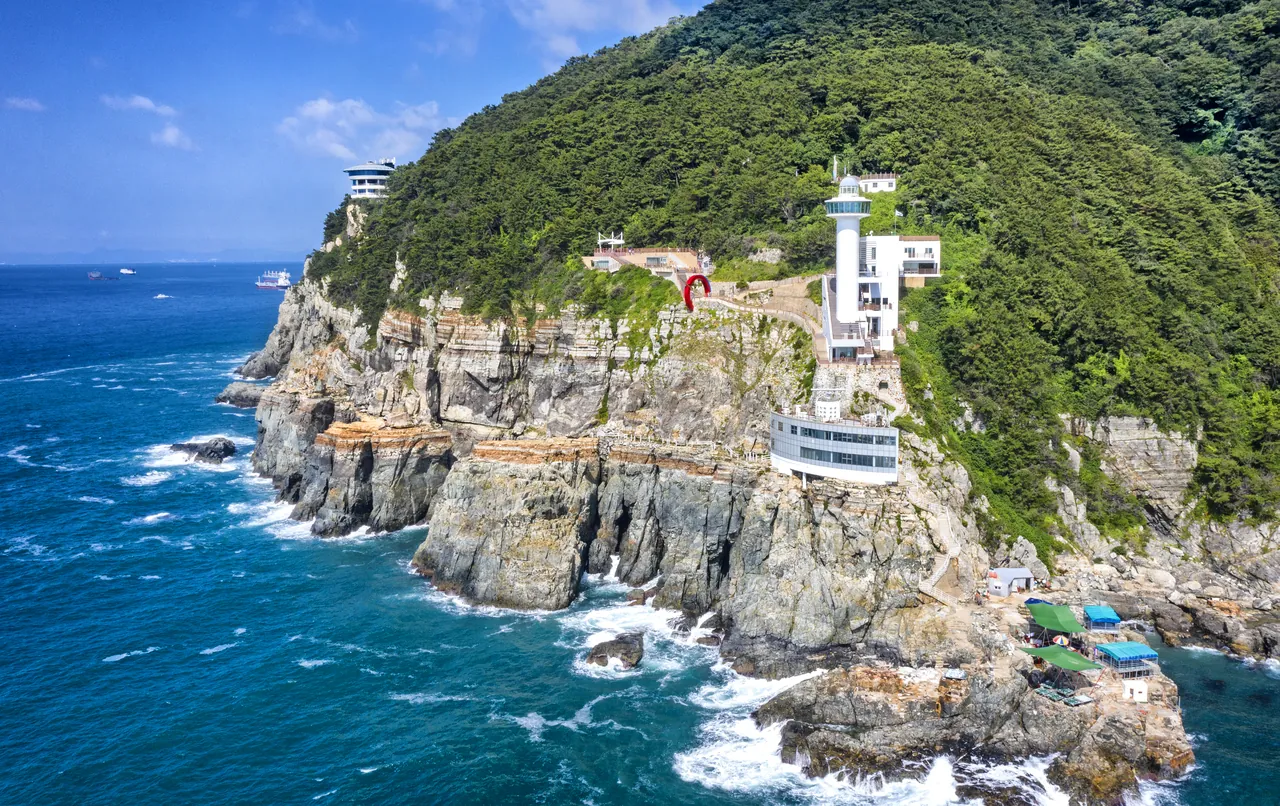
태종대유원지
Choose between walking the hilly loop and riding the free shuttle bus that stands in for the Danubi Train, which is not running while it undergoes safety checks; the shuttle's days, queues and weather stoppages are separate from the park's own opening hours.

태권도원
A site built for taekwondo and nothing else, run by the Taekwondo Promotion Foundation. A whole valley below Baegunsan on the Deogyusan ridge is given over to it, holding a competition arena, the T1 theatre, the National Taekwondo Museum, the Doyakgwan lodging block and an observatory. At 2,314,000 square metres it runs its own shuttle bus inside the grounds. For a visitor who has never trained, the draw is the demonstrations and the short experience classes rather than the facilities themselves; the approach is a bus from Muju Public Bus Terminal towards Seolcheon.

태릉과 강릉
The Joseon Royal Tombs Exhibition Hall, which covers the tombs as a whole, stands inside this precinct. If several tombs are on the itinerary, starting here is what makes the rest legible.

아침고요수목원
The only place in this guide whose operator publishes a page for each of the four seasons, and it means it: the hours themselves change for a third of the year, when the winter light festival pushes closing time to 21:00.

제3땅굴
The departure time you book decides how you go down. Paju marks each shuttle either monorail or on foot, and describes the walking route as cramped and steeply graded — which is why the operator publishes a list of who may be refused entry.

문무대왕릉
A rock outcrop in the sea, held to be the grave of the king who completed Silla's unification of the Three Kingdoms. It lies offshore from Bonggil-ri, cannot be landed on, and the visit consists of looking at a rock some two hundred metres out from Bonggil Beach. It faces due east, so people gather here at sunrise. It is a little over thirty kilometres east of central Gyeongju, too far to fold into a day among the city-centre tombs.

공주 무령왕릉과 왕릉원
Seven royal tombs of Ungjin-period Baekje on the south slope of Songsan. One of them, the tomb of King Muryeong, was found with its own memorial tablets, making it one of very few Three Kingdoms tombs whose occupant and date are known. It was long called the Songsan-ri tombs.

통인시장
Plan around the lunchbox cafe rather than the market: it closes on Tuesdays and stops selling tokens well before the market itself shuts.

뚝섬한강공원
A Hangang park on the Jayang-dong riverside, and among the simplest of them to walk into — an exit of Jayang station on Line 7 opens straight onto the park.

우도
The ferry controls the whole day: photo ID is a legal requirement to board, not a formality, and outside vehicles are barred from the island until 31 July 2029 apart from named exceptions. Plan around the last sailing back, and note the island charges its own park admission on top of the fare.

의릉
The former KCIA auditorium still stands inside the tomb walls. The July 4th North-South Joint Statement was announced in that building, so a Joseon royal tomb and twentieth-century political history share one precinct.

유엔기념공원
The only United Nations cemetery in the world, holding the war dead of the countries that fought in the Korean War. For a visitor from one of those countries it is the clearest reason to be in Busan. It is a cemetery rather than a sight, and it closes an hour earlier in winter.

운현궁
Not one of the grand palaces and not trying to be — a compact residential compound three minutes from Anguk Station that fills the gap between two bigger stops.

전쟁기념관
Closes at 17:40, not 18:00, and stops admitting visitors at 17:00 — a 40-minute gap that catches people who arrive after an afternoon elsewhere. Closed Mondays, and when a holiday falls on a Monday the closure moves to the day after, which is the rule most itineraries miss.

월정교
Free and open late, which makes it the easiest night stop in Gyeongju. The exhibition inside the gate towers covers the restoration itself.

월미도
The seaward edge of Incheon beside the working port, and the city's oldest day-out strip. Wolmi Culture Street runs 600 metres along the shore, lined with raw-fish restaurants, cafés, fairground rides and portrait artists, with the Moonlight Music Fountain playing on the waterfront in front of it. Behind that, Wolmisan was shut for fifty years as a military post until the city bought it and opened it as a park in 2001; it now holds an observation deck, a reconstructed Korean traditional garden and the Korean Emigration History Museum.

월드컵공원
A park made out of the Nanjido landfill, which took Seoul's rubbish for fifteen years from 1978. It opened in 2002 and is divided into five areas, two of which are hills built from the waste itself.

양화한강공원
A 5.9 km stretch of the south bank from the mouth of the Yeouido Saetgang up to Gayang Bridge. Roses come out from May along the cycle path under Seonyu Bridge, and exit 4 of Dangsan station reaches the park directly over a 200 m footbridge with a lift on it. The operator singles out the view from its broad riverside lawn as one that is hard to find elsewhere.

영릉과 영릉
Sejong’s Yeongneung and Hyojong’s Yeongneung stand side by side — the first Joseon royal tomb to bury king and queen under one mound, and the first to stack their two mounds on one hillside. Admission is half what the other tombs charge.

여의도한강공원
Free, ungated and open around the clock — and governed by a fine schedule most visitors never read. Camping or cooking outside a designated spot is KRW 1,000,000 for a first offence, and parking outside a marked bay is KRW 50,000.

용두산공원과 부산타워
The park and the tower are two different decisions: the park costs nothing and never closes, the tower charges admission and stops selling tickets at 21:30.

용머리해안
A sea cliff where the foot of Sanbangsan runs out into the water, named for its likeness to a dragon's head going under. Volcanic debris from three craters offshore piled up here and the waves cut it into layered, curving rock. In front of the cliff — about 700 m long and 25 to 40 m high — a flat wave-cut platform carries the walking route. The monument to Hamel's shipwreck, put up in 1980, stands nearby. What governs a visit is not the posted timetable but the tide on the day: at high water or in heavy swell the route is closed outright.

융릉과 건릉
Prince Sado’s Yungneung and Jeongjo’s Geolleung share one precinct. Yungneung’s mound carries a screen of stone panels and no balustrade, and the stones that pin that screen are carved as flower buds.

유성온천
The hot-spring quarter around Bongmyeong-dong in Daejeon's Yuseong district: hotels and bathhouses drawing on alkaline spring water of 27–56°C, plus a free public foot spa in the park that is separate from all of them. The quarter is not one facility, so prices and closing days belong to the individual businesses.