First Time in Seoul: A Simple Starter Plan
Four things to have on day one, and the few numbers that change what you spend — including why the last train is not one time.
Language
Getting lost on your first day in Seoul is usually not a shortage of information — it is not knowing the numbers. What the base fare is, how long a transfer window lasts, when the last train goes. Those three largely decide your route and your spending.
Four things for day one
Naver Map or KakaoMap
Google Maps has no walking directions here.
A transit card
1,550 won base fare. For several days, price the Climate Card too.
20–30,000 won in cash
Stalls and markets. Cards handle the rest.
Save 1330
07:00 to midnight, every day, seven languages.
The numbers that change your day
| Subway base fare (card, to 10 km) | 1,550 won |
| Single journey | 1,650 won + 500 deposit |
| Transfer window | 30 minutes from tapping out (60 between 21:00 and 07:00) |
| Transfers | up to four a day |
| Early-morning discount | 20% if your first boarding is before 06:30 |
Always tap off. Skip it on a bus and that leg stops counting as part of a transfer, so the next vehicle charges a fresh base fare.
For a stay of several days, price the Climate Card short-term pass. The 1-day pass at 5,000 won pays from your fourth separately-charged ride; the 5-day at 15,000 clears at two rides a day. But airport buses, wide-area buses and the Sinbundang Line are excluded, so budget the airport transfer separately.
The last train is not one time
"The subway runs until midnight" is a feel, not a schedule. The last train differs by line, station, direction and day, and two directions at the same station can be twenty or thirty minutes apart.
This is what puts people in a taxi on their first evening. If it might run late, check the last train from your station, in your direction.
What to put in the first two days
Seoul is large and its sights are scattered, so one district per day cuts travel time sharply.
Day 1 — Jongno. Gyeongbokgung at the centre, walking on to the other palaces, Bukchon and Insadong. Palaces have a weekly closing day; check before you go.
Day 1 evening — Myeongdong or Gwangjang Market. Both a short subway ride from Jongno, and where the evening street food is.
Day 2 — Hongdae and Yeonnam, or Seongsu. The contemporary side, connected by Line 2.
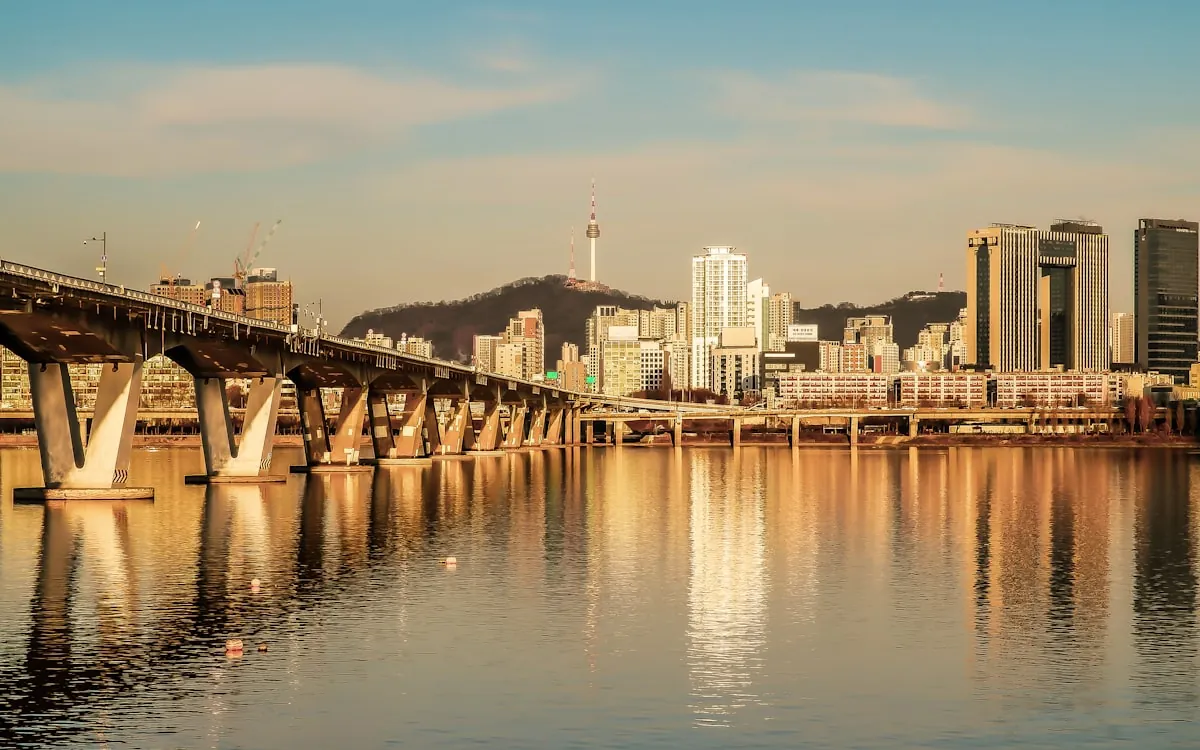
Day 2 evening — Namsan or the Han River. Going up about thirty minutes before sunset gets you the golden hour and the night view in one visit.
Forcing Gangnam in as well turns the trip into transit. North of the river is enough for a first visit.
You need two map apps
Google Maps does not offer walking directions in Korea. Place search and subway routes work; the problem starts once you come up the station stairs.
Search in whichever app you like and take the route from Naver Map or KakaoMap. Pasting the Korean place name or road-name address raises the accuracy considerably.
Screenshot your accommodation's Korean address
In a taxi, showing a Korean address on screen is overwhelmingly faster than pronouncing it, and a screenshot survives a dropped connection.
For where to stay, on the Line 2 loop or near an interchange is what actually helps. The station changes your day more than the neighbourhood's character does.
When you are stuck, 1330
The tourist line 1330 — dial 1330 inside Korea with no area code, or +82-2-1330 from abroad. Open 07:00 to midnight every day of the year in seven languages, providing interpretation, complaint handling and lost property, and connecting on to the immigration centre (1345) and the fire service (119).
If calling is hard, text 1330 or use KakaoTalk, Line or WeChat.
The stops this plan names, with their hours

Gyeongbokgung Palace
Day one's anchor. It has a weekly closing day, which is the one thing that can undo the morning.

Bukchon Hanok Village
The walk on from the palace. People live here, so the visiting rules are part of the plan.

Gwangjang Market
The day-one evening, if you take the market rather than Myeongdong.
Frequently asked questions
What should I do first on day one?
Buy a transit card, install Naver Map or KakaoMap, get 20–30,000 won in cash, and save 1330. Those four remove most first-visit problems.
What does the subway cost?
1,550 won for an adult with a transit card, flat to 10 km. A single journey is 1,650 plus a 500 won deposit, refunded at a machine in your destination station.
How long do I have to transfer?
Board the next vehicle within 30 minutes of tapping out, or 60 between 21:00 and 07:00, for up to four transfers a day.
Is the Climate Card worth buying?
It depends on how much you ride. The 1-day pass at 5,000 won pays from your fourth ride and the 5-day at 15,000 clears at two rides a day — but airport buses, wide-area buses and the Sinbundang Line are excluded.
Can I get around on Google Maps?
Place search and subway routes work, but walking directions are not offered. Use Naver Map or KakaoMap alongside it.
How should I plan the first two days?
One district per day. Day one in Jongno for the palaces and Bukchon, evening in Myeongdong or Gwangjang Market. Day two in Hongdae and Yeonnam or Seongsu, evening at Namsan or the Han River. North of the river is enough for a first visit.
What time is the last train?
There is no single answer. It varies by line, station, direction and day, with twenty or thirty minutes between two directions at one station, so check your own station and direction.
Nearby Food
- Five Seoul Korean Barbecue Restaurants: Hanwoo, Galbi, Bulgogi and Pork Belly

- What the broth is made of — eight Seoul houses, seven different bases

- Northern Korean Food in Seoul: Naengmyeon, Eobok-jaengban, Mandu and Kongbiji

- Seven Seoul houses that open for breakfast — before eight in the morning

- Six Seoul houses that make the noodle by hand — kalguksu, guksi, sujebi

- How to Use Seoul Cafes: Neighbourhoods, Ordering and Seating

Travel Guides


Related articles
- First Time in Seoul: 5 Places to Start

- Seoul in a Day: Gyeongbokgung to Dongdaemun, 4.1 km on Foot

- Squid Game Filming Locations in Seoul — a Subway Platform, a Bus Terminal and a Convenience Store

- Kingdom Seoul Palace Filming Route — Three Palaces and a Shrine on Foot

- Parasite Filming Locations — a Half-Day Seoul Route, North to South

- Parasite Filming Locations in Seoul — Four Places, Three of Them Staircases
Last verified:
Official sources
- Fact check: Seoul price information — subway base fare 1,550 won, single journey 1,650, distance surcharge, 20% early-morning discount
- Fact check: Seoul Metropolitan Government — integrated transfer discount (30 minutes from tap-out, 60 between 21:00 and 07:00, four a day, same route excluded)
- Fact check: Seoul Metropolitan Government — Climate Card tiers, short-term pass prices and excluded services
- Fact check: Korea Policy Briefing — the 1330 tourist line (hours, seven languages, text and messenger, links to 1345 and 119)
- Fact check: Royal Palaces and Tombs Center — palace visitor information