Seoul in Two Days on Foot: Jongno’s Palaces and the City’s Southern Night View
A practical two-day Seoul itinerary for first-time visitors. Day one links the palaces and old lanes of Jongno, while day two crosses the southern city center from Deoksugung and Cheonggyecheon to Myeongdong and the night view from N Seoul Tower.
Language

With only two sightseeing days in Seoul, it is better to follow two compact routes than to collect as many landmarks as possible. Day one moves through the palaces and hanok lanes of Jongno. Day two crosses the southern city center and ends with the night view from N Seoul Tower.
The existing one-day itinerary runs from Gyeongbokgung to Dongdaemun in a single sweep. This plan slows the pace by dividing central Seoul into two walkable axes. It does not try to cover every major attraction. Instead, it combines the traditional places and city views that are hardest to leave out on a first visit.
At a glance
On day one, start at Gyeongbokgung, continue through Bukchon and Changdeokgung, and finish in Ikseon-dong. On day two, begin at Deoksugung, walk through part of Cheonggyecheon, continue to Myeongdong, and end at N Seoul Tower.
Palace hours and closing days can change by season and day of the week. Check the linked place pages and the Seoul palace comparison guide before setting out.
Day 1: Gyeongbokgung to Ikseon-dong
Gyeongbokgung Palace
Begin at Gyeongbokgung. It is easy to reach from Gyeongbokgung Station, and the size of the grounds makes it a sensible morning stop. This is not a palace to reduce to one main building: the approach through the gates, the central throne hall, and the grounds around Gyeonghoeru are all part of the visit.
Opening and last-entry times vary, so rely on the latest place information instead of a fixed time written into this itinerary. If your first day is Tuesday, consider doing day two first.
Bukchon Hanok Village
Continue to Bukchon Hanok Village. Bukchon is a residential neighborhood, not an open-air folk museum. Keep entrances clear, speak quietly, and do not enter private property while taking photographs.
Some streets are covered by special visitor restrictions and residential-protection rules. Follow the signs on site. There is no need to walk every lane; choose a route that gives you a view of the neighborhood while continuing naturally toward Changdeokgung.
Changdeokgung Palace
Linking Bukchon with Changdeokgung lets you compare two royal spaces without crossing the city. Gyeongbokgung is defined by its broad central axis, while Changdeokgung follows the surrounding terrain more closely.
The Secret Garden operates differently from general palace admission and may require a timed visit. If it matters to you, check the official instructions before the day. Without a garden booking, visit the main palace grounds and continue to Ikseon-dong.
Ikseon-dong Hanok Village
Finish the first day in Ikseon-dong. Both Bukchon and Ikseon-dong contain hanok buildings, but they offer different experiences. Bukchon is primarily a residential walk; Ikseon-dong is a compact commercial area of restaurants, cafés, and small shops.
Having dinner here avoids another cross-city journey. The lanes can become crowded, particularly on weekends, so choose one or two places to stop rather than trying to visit every shop.
Day 2: Deoksugung to Namsan
Deoksugung Palace
Start the second day at Deoksugung near City Hall Station. Its position among office towers makes it a useful place to see different periods of Seoul occupying the same view.
Check the Monday closure before visiting. If the palace is closed, do not keep it in the route simply to preserve the list. Spend more time in Myeongdong and Namsan, or replace it with an indoor stop such as the Seoul Museum of History.
Cheonggyecheon Stream
Cheonggyecheon provides a ticket-free walking section through the city center. You do not need to follow the entire stream. Walk only the section that fits the route toward Myeongdong.
On a very hot or rainy day, shorten this part of the itinerary and use the time for an indoor stop.
Myeongdong Shopping Street
Myeongdong does not have to be only a shopping stop. You can add Myeongdong Cathedral or choose between Namdaemun Market and the Shinsegae Main Store. Adding all of them, however, can leave you tired before Namsan.
Use the existing breakfast and noodle guides if you want a nearby meal. Shops keep different hours, so there is no single opening schedule for the whole district.
N Seoul Tower
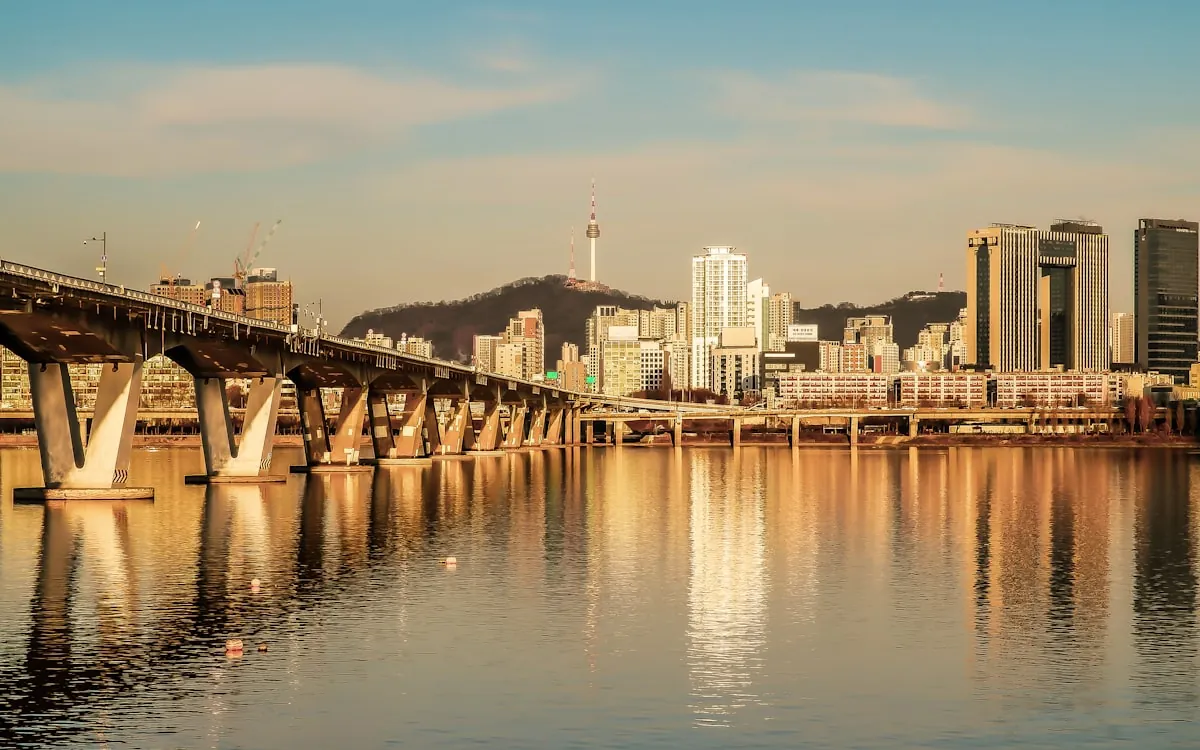
End the itinerary at N Seoul Tower. After two days at street level, looking over the city after dark gives the route a clear finish.
Visibility depends on the weather. On a cloudy evening, shorten the tower visit and use the Seoul night-view guide to compare other options.
Adjusting the route by day of the week
Gyeongbokgung is closed on Tuesdays, so reverse the two days and visit Jongno later.
On Mondays, Changdeokgung and Deoksugung may not fit the plan. Keep Gyeongbokgung, Bukchon, and Ikseon-dong on the first day, then focus on Cheonggyecheon, Myeongdong, and Namsan on the second. Leaving more room for meals and rest is better than filling every gap with another attraction.
What to do when it rains
Around Gyeongbokgung, the National Palace Museum of Korea and the National Folk Museum of Korea are practical indoor alternatives. Near Deoksugung, consider the Seoul Museum of History or the Shinsegae Main Store.
For a day of heavy rain, it may be simpler to replace several outdoor stops with the indoor route in the Seoul museums guide.
Keep meals close to the route
For lunch on day one, use the noodle and soup guides for options around Gyeongbokgung and Bukchon. Ikseon-dong works naturally for dinner. On day two, the breakfast and noodle guides include options around Myeongdong.
Restaurant prices and hours can change, so they are not fixed in this itinerary. Check the restaurant page and its official source before visiting.
Where to stay
Jongno, Euljiro, or another central area with simple subway transfers works well for this route. Staying in Hongdae, Gangnam, or Seongsu is also possible, but reaching the first stop will take longer. Compare the areas in the Seoul accommodation guide.
Related guides
Itinerary
Day 1 · From Palaces to Alleys across Jongno


Frequently asked questions
How many palaces can I visit in two days?
This itinerary includes Gyeongbokgung, Changdeokgung, and Deoksugung, but choosing only two is reasonable. A complete visit to one palace is more useful than rushing through several.
Can I use this itinerary on Monday or Tuesday?
Yes, but change the order. Do day two first on Tuesday. On Monday, replace Changdeokgung and Deoksugung with indoor or neighborhood stops.
Does the Secret Garden require a separate reservation?
The Secret Garden follows different entry procedures from the main palace grounds. Check the latest instructions from the Royal Palaces and Tombs Center before visiting.
Should I buy the integrated palace ticket?
It may be useful if you plan to enter several paid palaces. Check the current conditions first, because some experiences, including the Secret Garden, are not covered in the same way.
Can I complete the route by subway?
The main districts and starting points are accessible by subway, but much of the itinerary is designed for walking. Comfortable shoes matter.
What should I change if it rains?
Use the National Palace Museum or National Folk Museum on day one, and the Seoul Museum of History or an indoor Myeongdong stop on day two. For sustained rain, use the indoor route in the Seoul museums guide.
Nearby Food


Travel Guides


Related articles


Last verified:
Official sources
- Fact check: Royal Palaces and Tombs Centre — Gyeongbokgung visiting hours (closed every Tuesday; opening and last-entry times vary by season)
- Fact check: Royal Palaces and Tombs Centre — Changdeokgung visiting hours (closed every Monday; the rear garden is a separate timed-entry visit)
- Fact check: Royal Palaces and Tombs Centre — Deoksugung visiting hours (closed every Monday)
- Fact check: Royal Palaces and Tombs Centre — admission (what the integrated palace ticket covers and on what conditions)
- Fact check: Seoul Metropolitan Government — notice on visitor restrictions in the Bukchon special management area