Jeju Island Basics: Car, Bus, Weather, and Where to Stay
Choose a rental car, buses or selected tours; pick the right base; and build a Jeju plan that still works when wind or rain changes the day.
Language
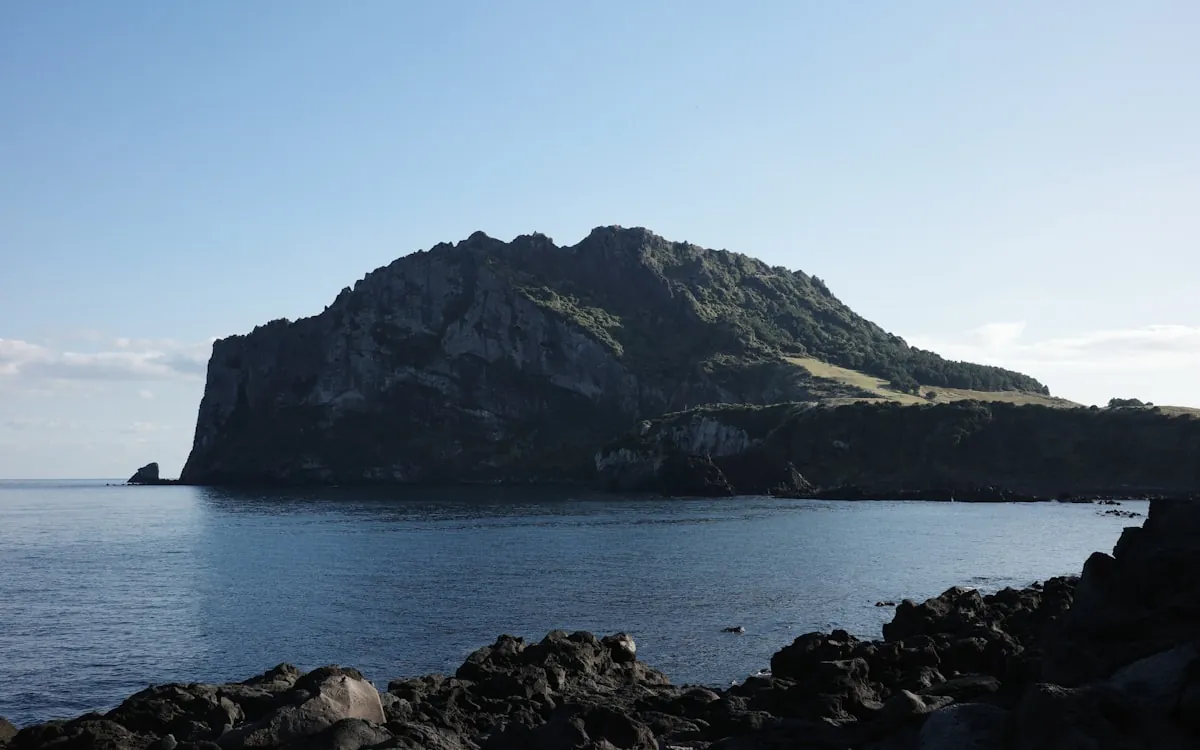
Jeju planning begins with three decisions: how you will move, which side of the island you will cover each day, and what you will do if the weather closes the outdoor plan. Choose those before reserving a hotel or collecting attractions.
The 30-second decision
Drive
Best when several nature stops are spread across one area and you are comfortable with the rental requirements.
Use buses
Works when you keep each day compact, check both directions in advance and accept waiting.
Book selected tours
Useful for one remote day when you do not want to drive; the route and timing are fixed.
Keep one indoor day
Wind and rain can change coastal, mountain and ferry plans even when the city is calm.
Choose transport before accommodation
| Your actual plan | Better starting choice | What you give up |
|---|---|---|
| Several separated outdoor stops in one region | Rental car | Rental documents, insurance decisions, parking and driving |
| One compact area per day | Bus | Detours and quick changes; waiting becomes part of the day |
| No driving, but one day of remote stops | Tour or pre-planned taxi | Freedom to change the order |
| Mostly Jeju City, with one or two excursions | Bus and taxi | Easy access to far coasts and oreum |
A car does not make every itinerary sensible. Crossing the island repeatedly still consumes the day. Buses are not automatically impractical either: they work when the hotel, first stop and return route sit on the same daily axis.
If you rent a car
Check the operator's current conditions before paying. Korea Tourism Organization guidance covers the documents foreign drivers may need, age and driving-experience conditions, payment, navigation and insurance; the rental company makes the final eligibility decision.
Before collection, confirm:
- the accepted licence and any required international driving permit;
- the exact name that must match the passport and booking;
- the driver's age and experience conditions;
- insurance coverage, deductible and exclusions;
- the fuel or charging return rule;
- where the vehicle is collected and returned;
- whether the navigation system can search a Korean address or phone number.
Do not schedule a time-sensitive attraction immediately after landing. Baggage, the rental shuttle, paperwork and learning the vehicle all sit between the aircraft and the first road.
If you use buses
Build the day around the return journey, not only the outbound route. Check the route again shortly before departure and save the stop name in Korean. A workable bus day has a small number of stops in the same part of Jeju, enough time for a missed connection, and a taxi fallback for the final leg.
Test the final leg first
Before booking a remote stay, plan the route from that accommodation to the next morning's first stop and back to the airport. A hotel can look central on a map while requiring an awkward transfer for the itinerary you actually chose.
If one attraction is essential, place it first and treat everything after it as optional. Do not create a chain in which one late bus ruins a timed entry, sunset stop and dinner reservation.
Choose a base by the next two days
- Jeju City is the practical starting point for a late arrival, an early departure, a short stay or a mostly bus-based plan.
- Seogwipo suits consecutive days focused on the south of the island.
- East or west coast accommodation is useful when at least two consecutive days are genuinely concentrated there.
- Changing hotels every night usually exchanges sightseeing time for packing and check-in. Move bases only when it removes repeated crossings.
For a two- or three-night first visit, one base plus a deliberately limited daily area is easier to recover when the weather changes.
Treat weather as a route decision
Jeju's official visitor information warns travellers to account for seasonal rain, humidity and strong coastal winds. Conditions can differ between the mountain, coast and city, so a single island-wide icon is not enough for a mountain trail or exposed shore.
Use three checks:
- The previous evening: decide whether the next day's outdoor anchor still makes sense.
- The same morning: check the attraction or operator notice, not only a general forecast.
- At the entrance: accept a closure or restriction and use the backup; do not build the day around persuading staff to make an exception.
Keep one weather-independent block—museum, market, cafe area or rest time—that can replace several hours outdoors without forcing a cross-island transfer.
A simple first-trip structure
- Arrival day: stay near the arrival side, collect the car only if useful, and avoid a long remote loop.
- Full day 1: choose east, west, south or mountain as one axis.
- Full day 2: choose a different axis only after checking weather and the return route.
- Departure day: keep the final activity close enough that a delay does not threaten check-in, vehicle return or the flight.
This is a structure, not a list of mandatory sights. Jeju's UNESCO and geopark designations cover landscapes in different parts of the island; the designation does not make them a single compact attraction.
Use two places to test your plan
Hallasan National Park tests the mountain-weather and timed-entry part of a plan. Seongsan Ilchulbong tests whether an east-coast day is actually grouped in the east. Use them as route anchors only when they match your interests and current operating conditions.
Nearby

Hallasan National Park
Choose the trail before planning transport: only Seongpanak (9.6 km) and Gwaneumsa (8.7 km) reach the summit, both need an advance reservation, and both turn walkers back at a mid-mountain control point if they arrive after the cut-off. Every other trail is a half-day walk with no summit at the end of it.

Seongsan Ilchulbong Tuff Cone
Two separate walks share the site: a ticketed climb to the summit, 30–40 minutes of stairs, and a free coastal path around Umutgae with a much gentler gradient. The monthly closure is the thing that ruins trips — it is the first Monday, not a holiday pattern anyone guesses.
Do not promise the last day to a distant stop
Keep the airport return, rental-car return and check-in buffer ahead of sightseeing. Move a weather-sensitive or reservation-dependent place to an earlier full day whenever possible.
Frequently asked questions
Do I need a rental car in Jeju?
Not for every trip. A car is most useful for several separated nature stops. Buses can work for a compact area each day, while a selected tour can cover one remote day without driving.
Should I stay in Jeju City or Seogwipo?
Choose from the next two days, not from a general ranking. Jeju City is convenient for the airport and many short or bus-based stays; Seogwipo is a stronger base when consecutive days focus on the south.
Can I tour the east and west in one day?
It may be physically possible by car, but it produces a fragile first-trip plan. Keep one geographic axis per day unless the travel time and opening constraints have been checked.
What should I do if it rains?
Check the specific attraction or operator notice, then replace exposed outdoor time with the indoor block already reserved in the plan. Do not wait until you reach a closed entrance to invent the backup.
Where can I ask for current tourist information?
VISIT JEJU provides official tourist information, multilingual assistance and contact routes for tourism questions and complaints.
Nearby Food

Travel Guides

Related articles
- One Day in Jeju City: Breakfast, Market, Arboretum and Dinner

- Four places on Jeju's east side, and who decides how far in you get

- Half a day on Seogwipo's south shore — the route with no start time

- One day on Jeju's east side, timed by the operator rather than by me

- Three places on Jeju's west side where the posted time is not an opening time

- Extraordinary Attorney Woo Filming Locations in Jeju — a Rock, a Temple and a Bridge

Last verified:
Official sources
- Fact check: Jeju Special Self-Governing Province — the three UNESCO designations and the World Natural Heritage zones
- Fact check: Jeju Special Self-Governing Province — Global Geopark certification, 368 oreum, and over 160 lava tubes
- Fact check: VISIT JEJU — tourist information, multilingual chat, Welcome Center, and tourism complaints
- Fact check: VISIT JEJU — four-season climate, rain, humidity, and strong coastal winds
- Fact check: Korea Tourism Organization — rental-car documents, age rules, payment, navigation, and insurance
Photo credits