Five Historic Places in Busan: Beomeosa to Huinnyeoul Village
Five places to see Busan's history, set out in the order the centuries came, from Beomeosa, founded under Silla, to the cliff lanes on Yeongdo where Korean War refugees settled. All five are free. Includes opening hours, where to go instead when the two museums close on Mondays and 1 January, and how to group them into days.
Language

The usual mistake when choosing historic places in Busan is assuming they are all about the Korean War. In fact these five span five eras, and more than a thousand years separate the oldest from the newest.
So this list is not in order of fame. It is in order of period — beginning with a temple founded under Silla, passing through the opened port and the colonial decades, and ending in the lanes the war left behind.
Five eras, five places
Layers of time stacked in one city.
- Beomeosa — Silla. A large temple on the slope of Geumjeongsan, and the furthest of the five from the centre.
- Busan Modern and Contemporary History Museum — the treaty port and the colonial period. It occupies the old Oriental Development Company building.
- Provisional Capital Memorial Hall — the Korean War. The presidential residence of the 1,023 days Busan was the capital.
- UN Memorial Cemetery — the same war, from another position. The war dead of the countries that fought it.
- Huinnyeoul Culture Village — after the war. Lanes settled by refugees that became a neighbourhood.
That the middle three all fall in the first half of the twentieth century is the character of this city. The opened port, the colonial decades and the war followed one another inside fifty years, and each of the three left a building behind.
Three and two — history behind glass, and history that is simply still there
The five split in two. The Modern and Contemporary History Museum, the Provisional Capital Memorial Hall and the UN Memorial Cemetery have opening hours and interpretive signs. Beomeosa and Huinnyeoul Culture Village are places still in use.
That difference changes how you visit. The first three need to fit into a schedule that allows for their closing times. Beomeosa's visiting hours also need checking, but at Beomeosa and Huinnyeoul Culture Village, how you visit matters as much as when. Huinnyeoul is a lane people live in — do not block their doors — and Beomeosa is a working temple with worshippers in it.
The UN Memorial Cemetery differs from the other two exhibition sites on this axis as well. Before it is a place with displays it is a cemetery, and it is not walked the way a sight is.
On a Monday, three of the five
The Modern and Contemporary History Museum and the Provisional Capital Memorial Hall close on Mondays. Those two are what covers the early twentieth century here, so a Monday leaves a Silla temple, a cemetery and a village.
Both also close on 1 January. When a Monday is a public holiday, the Provisional Capital Memorial Hall closes the following day instead, so a Tuesday after a long weekend is worth checking again.
If Monday is your only day in Busan and city history is the point, it is worth moving the date. If you are in Busan on a Monday anyway, make it the half-day for Beomeosa — it is too far out to pair with the two central museums on any other day regardless.
How many in a day
The five sit one apiece in Geumjeong-gu, Jung-gu, Seo-gu, Nam-gu and Yeongdo-gu — effectively across the whole city.
The workable groupings:
- Jung-gu and Seo-gu — the Modern and Contemporary History Museum and the Provisional Capital Memorial Hall. The two districts adjoin, which makes this the natural pair; both close on Mondays, so they also carry the same risk on the same day.
- A Beomeosa day — the only one of the five that takes half a day, and it shuts at 17:00. A late-afternoon start does not work.
- Nam-gu and Yeongdo-gu — the UN Memorial Cemetery and Huinnyeoul Culture Village each take an hour or two, but they are on opposite sides.
Do not try to fit all five into one day. Reading them in order of period and walking them in order are different exercises. The two- or three-day Busan itinerary shows how to connect these places in a practical order.
Opening hours
Four of the five have a closing time. At the Modern and Contemporary History Museum last entry comes before closing, and the UN Memorial Cemetery closes at a different time depending on the month.
Beomeosa Temple visiting hours
| Every day | 08:00–17:00 |
|---|
Source: Visit Busan — Beomeosa Temple ·
Busan Modern and Contemporary History Museum hours
| Tue·Wed·Thu·Fri·Sat·Sun | 09:00–18:00last entry 17:00 |
|---|
Source: Visit Busan — Busan Modern and Contemporary History Museum ·
Provisional Capital Memorial Hall hours
| Tue·Wed·Thu·Fri·Sat·Sun | 09:00–18:00 |
|---|
UN Memorial Cemetery hours
| 5·6·7·8·9 | 09:00–18:00 |
|---|---|
| 10·11·12·1·2·3·4 | 09:00–17:00 |
For Huinnyeoul Culture Village, Visit Busan gives only 「daily」 and no clock times. The lanes are public road; the shops and viewpoints along them keep their own hours.
If something is closed or you are short of time
A closed door on this list does not have to end the plan — the other places can stand in.
- The two museums are shut (a Monday, or 1 January) — leave the treaty-port-to-wartime exhibitions for another day and pick one of the three with no closing day listed: Beomeosa, the UN Memorial Cemetery or Huinnyeoul Culture Village. For the war itself, the cemetery; for walking through what the refugees left, Huinnyeoul.
- You are starting late in the afternoon — Beomeosa takes half a day and closes early, so drop it for that day. The UN Memorial Cemetery also closes an hour earlier from October to April than in summer. Huinnyeoul, which publishes no closing time, is what is left for a late start.
- You can only fit one museum — for the whole modern span of the city, the Modern and Contemporary History Museum; for one narrow chapter of the Korean War, the Provisional Capital Memorial Hall. The former has a last-entry time, so check it first if you are going in the afternoon.
Whichever applies, if your visit falls on a public holiday or a long weekend, check the institution's closure notice again before you set out.
All five are free to enter
On this list the only cost is getting between them. The five sit one apiece in five different districts, so how many you attempt in a day is what sets the budget.
In this list
 Busan
BusanBeomeosa Temple
A Silla-founded temple on the slope of Geumjeongsan, counted with Tongdosa and Haeinsa among the great temples of the south-east. It makes an entirely different day from the Haeundae-and-Gwangalli one. Of the five it is both the furthest from the centre and the oldest.
- Which Busan
- Silla
- What you actually see
- A large temple on a mountainside, and how it is laid out
- Best for
- Anyone who wants a day in Busan that is not about the sea
08:00–17:00Open year-roundFree
 Busan
BusanBusan Modern and Contemporary History Museum
Housed in the former Busan branch of the colonial-era Oriental Development Company. The subject is what Busan became after its port opened, and because the building is itself an object from that period, the exhibits and the shell tell the same story. It stands on Daecheong-ro in Jung-gu, the district that also holds Gukje Market and the Bosu-dong book alley.
- Which Busan
- The treaty port and the colonial period
- What you actually see
- City history shown inside a colonial-era building
- Best for
- Anyone asking how Busan became a port city
09:00–18:00 (last entry 17:00)Jan 1 · Every MonFree
- Busan
Provisional Capital Memorial Hall
The two-storey house used as the presidential residence during the 1,023 days Busan was the provisional capital in the Korean War. Where the Modern and Contemporary History Museum takes the whole span, this takes one period narrowly.
- Which Busan
- The Korean War (1,023 days as capital)
- What you actually see
- A residence used by a president, and the exhibits of that period
- Best for
- Anyone who would rather go narrow and deep on one period
09:00–18:00Jan 1 · Every Mon (closed the following day instead if it falls on a public holiday)Free
 Busan
BusanUN Memorial Cemetery in Korea
The only United Nations cemetery in the world, holding the war dead of the countries that fought in the Korean War. For a visitor from one of those countries it is the clearest reason to be in Busan. It is a cemetery rather than a sight.
- Which Busan
- The Korean War (its dead, and the countries that sent them)
- What you actually see
- Graves of the war dead from several participating nations
- Best for
- Anyone visiting the ground of a war their own country fought in
May–Sep 09:00–18:00 · Jan–Apr, Oct–Dec 09:00–17:00Open year-roundFree
 Busan
BusanHuinnyeoul Culture Village
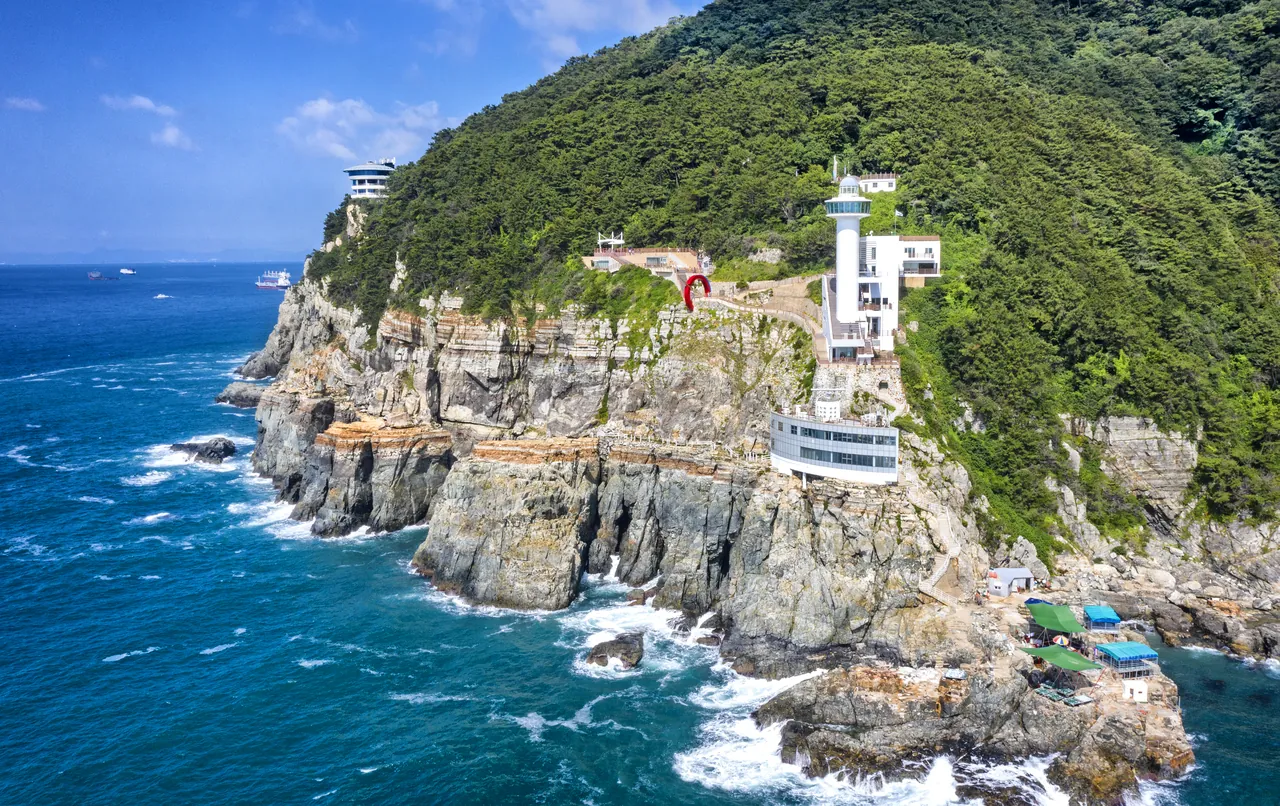
Houses pressed along a sea cliff on Yeongdo, with a narrow path running beneath them beside the water. It was settled by refugees during the Korean War, so the period the previous two put behind glass is here in the shape of the lanes. People live in them; do not block their doors.
- Which Busan
- After the war — what the refugees left
- What you actually see
- Houses on a cliff and the shore path under them
- Best for
- Anyone who would rather read a period off a lived-in place than a display case
not published by the operatorOpen year-roundFree
Frequently asked questions
How much do Busan's five historic places cost?
All five are free. There is no admission charge at Beomeosa Temple, the Busan Modern and Contemporary History Museum, the Provisional Capital Memorial Hall, the UN Memorial Cemetery or Huinnyeoul Culture Village.
Can I see historic sites in Busan on a Monday?
Three of them. The Busan Modern and Contemporary History Museum and the Provisional Capital Memorial Hall close on Mondays; Beomeosa, the UN Memorial Cemetery and Huinnyeoul Culture Village stay open.
Can I see all five in one day?
Not advisable. They are spread across Geumjeong-gu, Jung-gu, Seo-gu, Nam-gu and Yeongdo-gu, and Beomeosa alone takes half a day. Pairing the two in Jung-gu and Seo-gu is the sensible unit.
If I can only pick one of the two museums?
For the whole span of what Busan is, the Modern and Contemporary History Museum; for one chapter of the Korean War, the Provisional Capital Memorial Hall. Both close on Mondays.
What time does the UN Memorial Cemetery close?
18:00 from May to September and 17:00 from October to April — an hour earlier in winter.
Nearby Food


Travel Guides

Related articles



Last verified:
Official sources (5)
- Fact check: Visit Busan — Beomeosa Temple visiting hours (08:00–17:00) and free admission
- Fact check: Visit Busan — Busan Modern and Contemporary History Museum hours (09:00–18:00, last entry 17:00) and Monday closure
- Fact check: Visit Busan — Provisional Capital Memorial Hall hours (09:00–18:00), closed Mondays and 1 January
- Fact check: Visit Busan — UN Memorial Cemetery hours (May–September 09:00–18:00, October–April 09:00–17:00)
- Fact check: Visit Busan — Huinnyeoul Culture Village