Busan in 2 or 3 Days: Old City, Haeundae to Gwangalli, Beomeosa
A first-timer's Busan route. Day 1 covers the western old city — the Provisional Capital Memorial Hall, Nampo-dong and Huinnyeoul Culture Village; day 2 the eastern coast from Haeundae along Blue Line Park to Songjeong and Gwangalli; day 3 runs from Beomeosa down to the UN Memorial Cemetery and Oryukdo. Includes how to choose between two and three days, Monday closures, opening hours and bad-weather swaps.
Language

Busan is long from east to west, and the mistake first-time visitors make most often is putting Haeundae and Nampo-dong in the same day. This route is built to avoid exactly that. Day 1 stays in the western old city; day 2 stays on the eastern coast. If you have a third day, it comes down from a mountain temple in the north to the southern shore.
Check before you go
Day 1 does not work on a Monday
The Provisional Capital Memorial Hall and the Busan Modern and Contemporary History Museum both close on Mondays. Swap days 1 and 2.
Gukje Market is shut on Sundays
Only that one drops out of day 1's afternoon. Jagalchi Market and the Bupyeong night market both open on Sundays.
The Sky Capsule is priced per capsule
A two-seat capsule is not a per-person fare. Split between two people it still costs far more than the tram.
Most of the sights here are free
The two museums, Beomeosa, the UN cemetery, Oryukdo and Huinnyeoul all cost nothing. What you pay for is the beach tram and the Sky Capsule.
Do not run day 1 as written on a Monday
Day 1's first two stops — the Provisional Capital Memorial Hall and the Busan Modern and Contemporary History Museum — are both closed on Mondays. Both also close on 1 January. If Monday is your first day, the simplest fix is to swap days 1 and 2 wholesale; nothing on the coast day depends on the weekday.
Day 3's Beomeosa and the UN cemetery do open on Mondays.
Two days or three?
The route is built as two days with a third that bolts on. Use these to decide which you need.
- Two days is enough if this is your first time in Busan and you want to see the old city and the sea once each. Day 1 (the western old city and Yeongdo) and day 2 (the eastern beaches) already cover both sides, and it is the version with the least travelling.
- Add day 3 if you want one day of Busan that is not about the sea (Beomeosa on the slopes of Geumjeongsan), if you want to follow the Korean War story that starts at the Provisional Capital Memorial Hall on day 1 through to the UN Memorial Cemetery — above all if you come from one of the countries that fought in it — or if a Monday in your trip means day 1 has to move and you want slack.
- Before adding day 3, weigh this: it runs from the northern edge of the city to the southern one, so the travel is long and includes two bus transfers. In winter the UN cemetery closes earlier, and in bad weather the Oryukdo skywalk restricts access. If that sounds like more than you want, two unhurried days are the better trip.
Opening hours of day 1's two museums
Both of day 1's morning stops keep set hours, and at the Busan Modern and Contemporary History Museum last entry comes before closing. Check that the route's start times fall inside the tables below.
Provisional Capital Memorial Hall hours
| Tue·Wed·Thu·Fri·Sat·Sun | 09:00–18:00 |
|---|
Busan Modern and Contemporary History Museum hours
| Tue·Wed·Thu·Fri·Sat·Sun | 09:00–18:00last entry 17:00 |
|---|
Source: Visit Busan — Busan Modern and Contemporary History Museum ·
Why the days are split east and west
Busan's sights sit at the two ends of the city. Nampo-dong and Yeongdo are west; Haeundae, Songjeong and Gwangalli are east, and crossing between them on the metro takes a real bite out of a day. Fit both into one and you will have spent longer underground than anywhere you went.
So each day here stays on one side. Day 1 runs down line 1 from Toseong through Jungang and Nampo to Yeongdo; day 2 uses line 2 and the beach tram between Haeundae, Songjeong and Gwangalli. Only day 3 rides line 1 the long way, north to south — and that day was designed from the start as the one with travel in it. For a full day linking Yeongdo’s shipyard lanes with Huinnyeoul and Taejongdae, use the one-day Yeongdo itinerary.
With only two days, drop day 3 whole
Days 1 and 2 already give you both faces of the city: the old refugee capital and the beach town. Day 3 is a day to add if you have it, not a day to assemble by taking pieces out of the first two.


About the meals
Lunch on days 1 and 3 is milmyeon both times, on purpose. Halmae Gaya Milmyeon in Nampo-dong serves milmyeon and bibim milmyeon; Gukje Milmyeon Main Branch in Yeonje-gu on day 3 makes its broth from beef leg bone alone and tops it with brisket torn by hand. The same dish from two different kitchens, a day apart. Gukje Milmyeon's last order comes before closing and it shuts for Seollal and Chuseok, so check ahead if your lunch runs late or falls on those holidays. To compare the milmyeon and dwaeji gukbap restaurants used in this itinerary, check their cards in the Busan milmyeon and dwaeji gukbap guide. The Busan food guide separately explains how to order seafood at the market and how food choices differ between the old city and the beaches.
This route does not pick your day 2 lunch
Lunch around Songjeong is left open rather than fixed to one restaurant. The slot inside 13:00–15:00 is yours to fill: restaurants cluster behind the sand at Songjeong and Cheongsapo, and one block back from the beach the choice widens again. Pick whatever is open on the day.
Dinner is different. 19:15–20:15 puts a gukbap house within walking distance of Gwangalli, and that one shuts for a mid-afternoon break. The stop is timed for the evening, so following the route as written keeps you clear of it.
Riding the beach tram on day 2
The tram runs from the morning, and its last departure varies by season. This route puts the ride at 10:45–12:45, so the first-departure time is not something you need to plan around.
Beach tram operating hours
| 11·12·1·2 | 09:00–19:00 |
|---|---|
| 3·4·10 | 09:00–19:30 |
| 5·6·9 | 09:00–20:30 |
| 7·8 | 09:00–21:30 |
There is no single opening and closing schedule for the whole park; each ride has its own timetable. The times shown are for beach tram departures from Mipo and Songjeong. The operator says they may change with weekend and holiday demand, weather and safety conditions. The Sky Capsule has a separate timetable, which is not shown here.
Source: Haeundae Blueline Park — beach tram operating hours by season ·
The two fares work differently. The beach tram is priced per person; the Sky Capsule is priced per capsule. Two people sharing a capsule still pay far more each than they would on the tram. With four the gap narrows. The capsule runs on an elevated rail and only between Mipo and Cheongsapo; the beach tram is what goes on to Songjeong.
Riding the Sky Capsule? Check its own timetable
The Sky Capsule keeps a separate timetable from the beach tram, and the table above is the tram's. The operator says times can be adjusted for weekend and holiday demand and for weather, so if the capsule is part of your plan, check that day's hours and how tickets are sold on the official site before you fix day 2's morning.
If you are adding day 3
Day 3 runs from the northern edge to the southern one. Beomeosa is partway up Geumjeongsan, so it needs a bus from Beomeosa Station on line 1, and Oryukdo needs a bus from its station too. Those are the only two transfers on the route.


The UN cemetery's closing time moves with the season — it shuts an hour earlier from October to April than it does in summer. In winter 14:15–15:15 runs close to that limit, so come down from Beomeosa a little earlier.
The Oryukdo skywalk restricts access in snow, rain or strong wind. Treat the last stop of day 3 as something bad weather can take away. In wet weather, consider the National Maritime Museum of Korea instead of the Oryukdo skywalk. The museum is closed on Mondays, so check its hours for your visit date.
Here are the hours for day 3's three sights. Beomeosa needs the most time of the three yet closes early, so keep it as the first stop of the morning.
Beomeosa Temple visiting hours
| Every day | 08:00–17:00 |
|---|
Source: Visit Busan — Beomeosa Temple ·
UN Memorial Cemetery hours
| 5·6·7·8·9 | 09:00–18:00 |
|---|---|
| 10·11·12·1·2·3·4 | 09:00–17:00 |
Oryukdo Skywalk opening hours
| 1·2·3·4·5·10·11·12 | 09:00–18:00last entry 17:50 |
|---|---|
| 6·7·8·9 | 09:00–19:00 |
The times above are the skywalk's. Access is restricted in snow, rain or strong wind and during repairs, the operator says. No opening or closing time is published for the headland park's paths themselves.
Source: Visit Busan — Oryukdo and its skywalk ·
Where this route continues

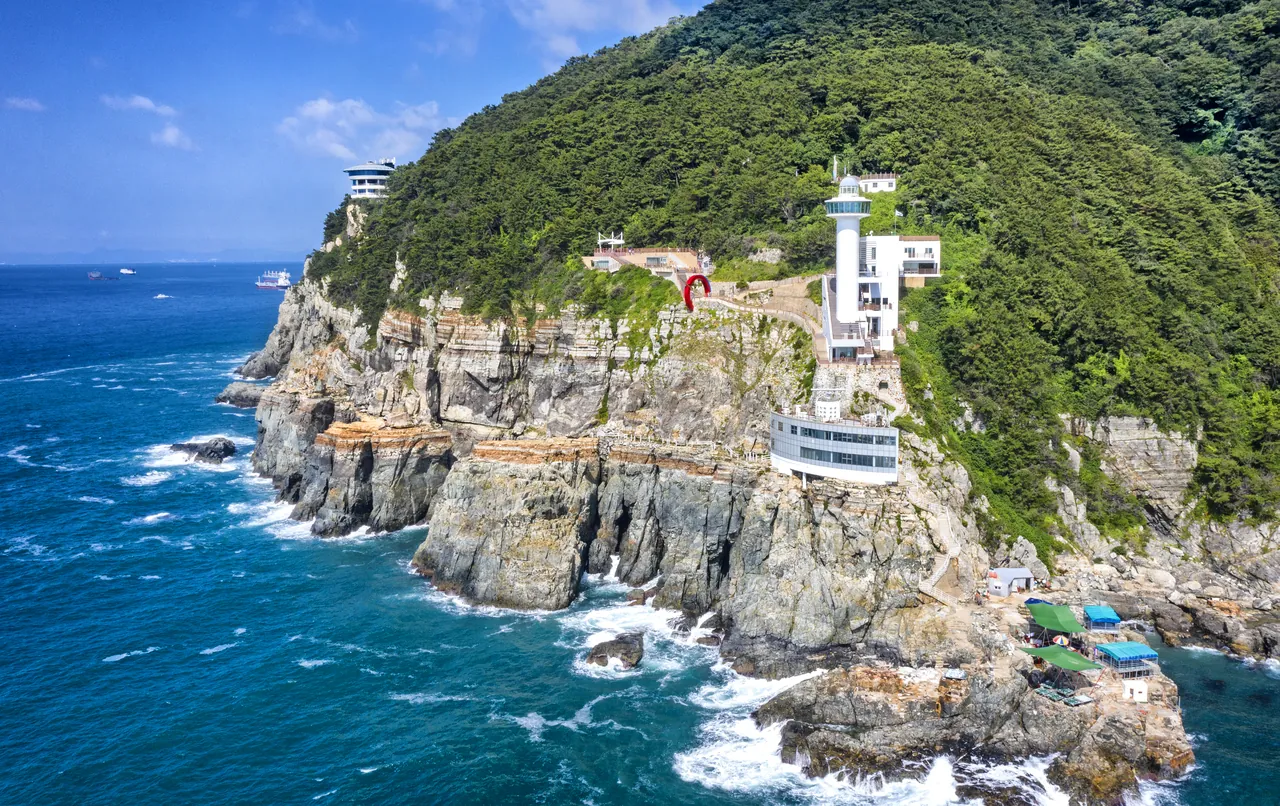
Oryukdo
Day 3's last stop. It also appears in the separate piece on five ways to see the Busan coast.

Provisional Capital Memorial Hall
Day 1's first stop. The same place anchors the piece that lays out Busan's five eras in order.

Jagalchi Market
The centre of day 1's afternoon. The Nampo-dong roundup carries the order to walk those five in.

Haeundae Blueline Park
The spine of day 2. From Mipo to Songjeong this leg is the travel and the itinerary at once.
Itinerary
Day 1 · The old city and the port — western Busan
Start with what is left of the wartime capital, walk the Nampo-dong market lanes, watch the light go from a cliff village on Yeongdo, then come back for the night market. The whole day sits on metro line 1. Start the day with a walk from Toseong Station on metro line 1.
To the next stopTake metro line 1 towards Jungang and Nampo.
To the next stopWalk from the museum towards Nampo-dong.
To the next stopWalk to the Nampo-dong market streets.
To the next stopTake a bus across Yeongdo Bridge from Nampo-dong.
To the next stopReturn from Yeongdo to Nampo-dong, then walk from Jagalchi Station Exit 3.


Frequently asked questions
How many days do I need in Busan?
Two is the realistic minimum. Busan is long from east to west, so putting the old city and the beaches in the same day means spending most of it on the subway. That is why day 1 here stays west and day 2 stays east. If you have three days, add the mountain temple in the north and the southern headland on day 3.
What should I skip if I am short on time?
Day 3 goes first, whole. Days 1 and 2 already cover both faces of the city. If you need to trim inside a day, drop the Provisional Capital Memorial Hall on day 1 and Songjeong Beach on day 2 — both come out without changing what that day is about.
Can I run this on a Monday?
Not day 1. The Provisional Capital Memorial Hall and the Busan Modern and Contemporary History Museum both close on Mondays. If Monday is your first day, swap days 1 and 2 — the coast keeps no weekday closures.
Does my transit card work in Busan?
Yes. A T-money or Cashbee card from Seoul works on the Busan metro and city buses. Most of this route sits on metro lines 1 and 2; only Beomeosa and Oryukdo need a bus from the station.
Where should I stay?
Seomyeon or Haeundae both work. Seomyeon is where lines 1 and 2 meet, so you reach the western old city and the eastern beaches without an extra transfer. Haeundae's advantage is that you can start day 2 on foot.
Nearby Food


Travel Guides

Related articles


Last verified:
Official sources (16)
- Fact check: Visit Busan — Provisional Capital Memorial Hall, open 09:00–18:00, closed Mondays and 1 January, free admission
- Fact check: Visit Busan — Busan Modern and Contemporary History Museum, open 09:00–18:00 with last admission 17:00, closed Mondays and 1 January, free admission
- Fact check: Visit Busan — Gukje Market, open 09:00–20:00 and closed on Sundays
- Fact check: Visit Busan — Jagalchi Market, open 05:00–22:00, closed the 1st, 3rd and 5th Tuesday of the month; Nampo Station exit 2 and Jagalchi Station exit 10
- Fact check: Visit Busan — Bupyeong Kkangtong Night Market, open 19:30–24:00, closed for Seollal and Chuseok; Jagalchi Station exit 3
- Fact check: Visit Busan — Huinnyeoul Culture Village. The hours field says only 「daily」 and gives no clock times; entry is free
- Fact check: Haeundae Blueline Park — beach tram running hours by season, first departure 09:00 from Mipo and Songjeong
- Fact check: Haeundae Blueline Park — fares for the beach tram and the Sky Capsule (the capsule is priced per capsule, not per person)
- Fact check: Visit Busan — Songjeong Beach, stated operating window 09:00–18:00, free to use
- Fact check: Visit Busan — Gwangalli Beach. Always open and free; 13 minutes' walk from Gwangan Station exit 5 on Line 2
- Fact check: Visit Busan — Beomeosa Temple, open 08:00–17:00, free admission
- Fact check: Visit Busan — UN Memorial Cemetery in Korea, open 09:00–18:00 May to September and 09:00–17:00 October to April, free admission
- Fact check: Visit Busan — the Oryukdo skywalk, open 09:00–18:00 January–May and October–December and 09:00–19:00 June–September, with access restricted in bad weather
- Fact check: Busan Tourism Organization — Eomyongbaek Dwaeji Gukbap, open 11:30–22:00 with a 15:00–17:00 break
- Fact check: Busan Tourism Organization — Gukje Milmyeon Main Branch, open 10:00–20:00 with last order at 19:30
- Fact check: Busan Tourism Organization — Halmae Gaya Milmyeon, open 10:30–21:30