Byeongsan Seowon Guide
A free UNESCO World Heritage site 3 km from Hahoe, reached by three buses a day and a dirt road.
Language

Place information
- Korean name
- 병산서원
- Address
- 386 Byeongsan-gil, Pungcheon-myeon, Andong, Gyeongsangbuk-do
- Opening hours
- Summer 09:00-18:00, winter 09:00-17:00. Andong City's tourism table gives the seasons as March to October and November to February; the academy's own page names no months at all. Rites are held on the first jeong day of the third and ninth lunar months.
- Closed
- Open every day of the year, with no admission charge and no parking charge; the car park is on the east side. The whole site is non-smoking, food may not be brought in, and no animals other than guide dogs are admitted. Leaflets in English, Japanese and Chinese are stocked at the museum entrance; guided commentary and interpretation are arranged in advance through Andong City's tourist information office.
Byeongsan Seowon is a UNESCO World Heritage site with no admission charge, no parking charge, no closing day, and three buses a day. The last of those numbers is the one that shapes a visit, and it is published by the academy itself rather than by anyone selling you a tour.
At a glance
Free, and so is the car park
No admission, no parking fee. The academy's own visitor page says both in two words each.
Three buses a day
Bus 210 leaves Andong at 08:20, 11:00 and 14:05, about 80 minutes. There is no fourth service.
Mandaeru is the reason people come
A pavilion open on all sides above the Nakdong, with the folding screen of Byeongsan across the water.
One of the 47 that survived
When the Regent Heungseon abolished the country's academies in 1868, this was among the few left standing.
The three buses, and what they mean for a day out
Byeongsan Seowon sits 3 km east of Hahoe Village, and both are UNESCO World Heritage sites. Getting between them without a car is the whole planning problem, and the honest answer is on the academy's own directions page.
City bus 210 makes three round trips.
| Leaves Andong | At Byeongsan Seowon | Leaves Hahoe for Andong |
|---|---|---|
| 08:20 | 09:30 | 09:45 |
| 11:00 | 12:25 | 12:40 |
| 14:05 | 15:30 | 15:45 |
The academy gives the run as about 80 minutes and the fare is the flat 1,500 won cash that covers every city bus in Andong, with a free transfer inside an hour. Hahoe itself has thirteen buses a day; only these three continue to Byeongsan. A day that works looks like the 08:20 out to the academy, then the same service back through Hahoe, or Hahoe first and the 14:05 for the afternoon.
There are two alternatives, and both are worth knowing. On foot from Hahoe it is an hour and a quarter along the flank of Hwasan; the village describes that road as unpaved, dusty and busy with cars, which is not a warning most itineraries pass on. By car it is ten minutes from outside Hahoe, or about fifteen minutes from the Seo-Andong interchange: Route 34 towards Yecheon, right for Hahoe, then left for Byeongsan.
What it costs: nothing, and the academy says so in two words
The visitor page is refreshingly short. Admission: free. Parking: free, in the car park on the east side. Opening hours are 09:00 to 18:00 in summer and 09:00 to 17:00 in winter, and the academy names no months for either — Andong City's table draws the line at March–October and November–February, which is the figure to plan against until the academy says otherwise.
There is no closing day. Rites are held on the first jeong day of the third and ninth lunar months.
The rules are short too, and stricter than a public park's: the entire site is non-smoking, no food may be brought in, and no animals other than guide dogs are admitted. Visitors are asked to keep quiet and not to run. This is still a working ritual space, not a ruin.
Leaflets in English, Japanese and Chinese sit at the museum entrance. Guided commentary — both the Andong City cultural interpreters, who work at twelve sites across the city, and a Byeongsan-specific guide programme — is arranged in advance through Andong's tourist information office rather than at the gate.
A school that moved because the neighbourhood got noisy
The academy's own history is more human than the plaque version.
It began as Punggak Seodang, a study hall in Pungsan dating to the middle Goryeo period. During the Red Turban invasions, King Gongmin's procession passed through Pungsan and the king was moved to find the students still at their books in the middle of a war; he granted them volumes and land to encourage them further.
Two centuries later the site had a problem no heritage listing records: houses had gone up around it, roads had been cut, and it had become too noisy to study in. The local literati went looking for somewhere else. Ryu Seong-ryong — later chief state councillor during the Japanese invasions, at that point home in Hahoe mourning his father — was asked where to put it, and said Byeongsan. The hall moved in 1575, when he was 31, and took the new name.
He died in 1607. His disciples built the Jondeoksa shrine in 1614 and enshrined his tablet, which was moved to Yeogang Seowon in 1620 and brought back in 1629 after a genuine argument about whether one county could honour one man in two academies at once — settled, in the end, by citing Zhu Xi. His third son Ryu Jin (1582–1635) was added in 1662. The royal charter came in 1863.
Five years later the Regent Heungseon abolished the country's academies, and Byeongsan is one of only 47 that were not torn down — 27 seowon and 20 shrines. It became Historic Site No. 260 in 1978, and in 2019 UNESCO inscribed it as one of the nine Seowon, Korean Neo-Confucian Academies. It holds around a thousand titles in some three thousand volumes.
Mandaeru, and the one detail the academy volunteers itself
The building people come for is Mandaeru, the pavilion. It is open on every side, its floor runs the length of the compound, and it frames the Nakdong's white sandbank and the ridge of Byeongsan opposite — the screen-like hill that gave the academy its name. The academy's own description is that the surroundings look like a single ink painting, and that the point of the architecture is the restraint: a lecture hall, Ipgyodang, arranged so that the building and the valley are the same composition.
Then there is the detail the academy volunteers itself, and it is the one you will remember. In front of the kitchen quarters stands a snail-shaped privy, open to the sky — a spiral wall with no roof and no door, which the site lists among its attractions in as many words. A World Heritage academy advertising its lavatory is not something you see often, and it is right to.
Go in the morning, and sit down
The 08:20 bus puts you at Byeongsan before the day warms up and before the Hahoe coaches have started circulating, and it is the only one of the three that leaves you unhurried. The academy takes about half an hour to walk round. Spend the other half hour sitting on Mandaeru's floor, which is what the building is for and what a thirty-minute visit skips.
Nearby
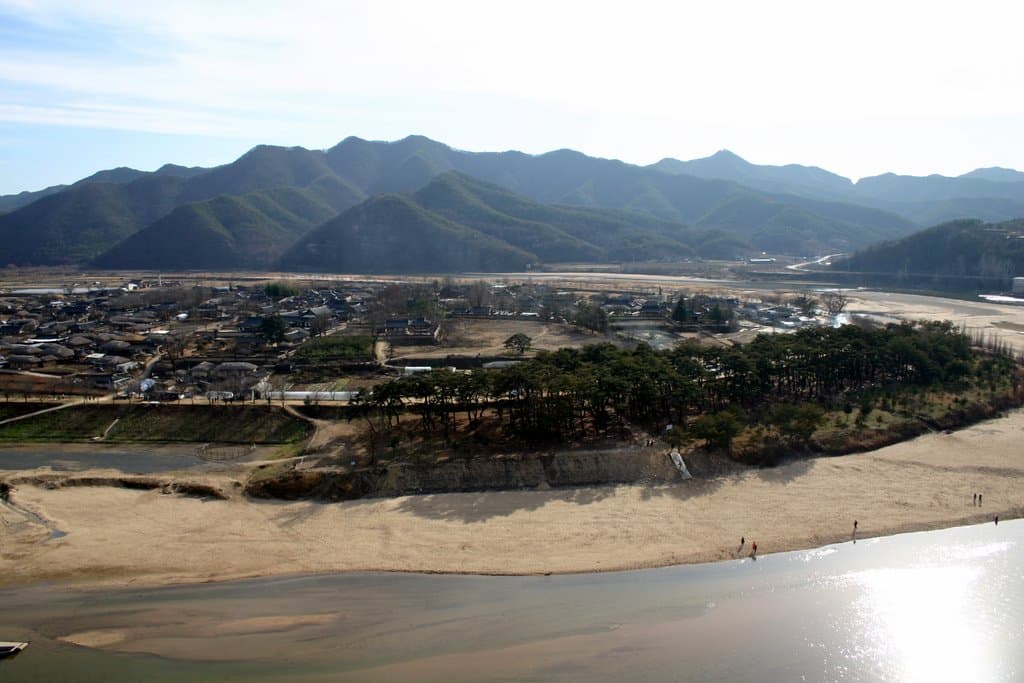
Andong Hahoe Folk Village
Three kilometres west and the other half of the day. Ryu Seong-ryong was born there, which is why the academy is here.
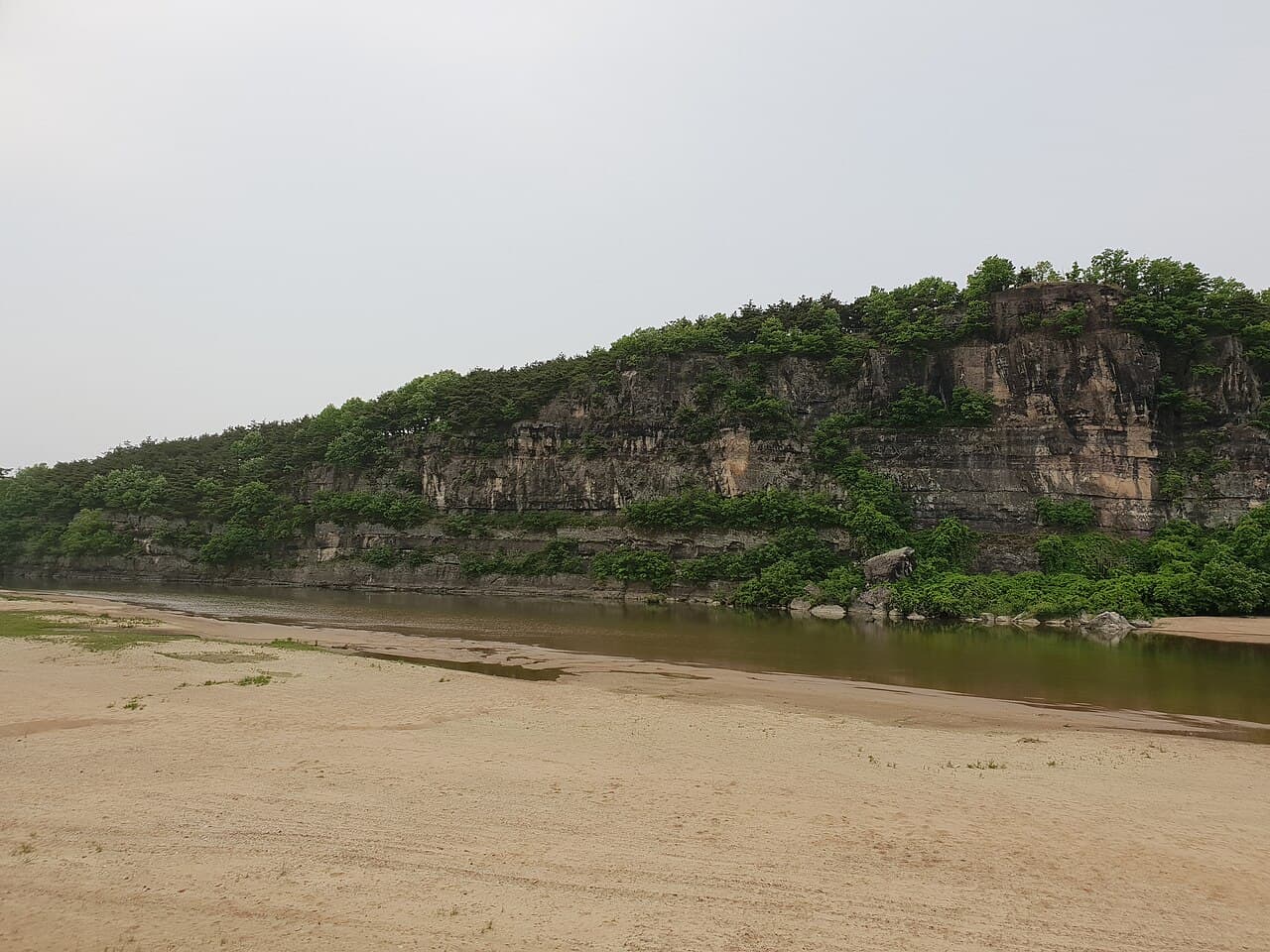
Buyongdae
The cliff on the far side of Hahoe, and the anchor point for the village's one night of fireworks a year.
Frequently asked questions
How much does Byeongsan Seowon cost?
Nothing. Admission is free and so is parking, in the car park on the east side of the academy.
What are Byeongsan Seowon's opening hours?
09:00 to 18:00 in summer and 09:00 to 17:00 in winter. The academy does not say which months those are; Andong City's tourism table gives summer as March to October and winter as November to February.
How do I get from Hahoe Village to Byeongsan Seowon?
City bus 210, three services a day, leaving Andong at 08:20, 11:00 and 14:05 — about 80 minutes, flat fare 1,500 won. On foot from Hahoe it is an hour and a quarter on an unpaved road; by car it is about ten minutes.
Is Byeongsan Seowon a UNESCO World Heritage site?
Yes. It was inscribed in 2019 as one of the nine Seowon, Korean Neo-Confucian Academies, and has been Historic Site No. 260 since 1978.
Who is enshrined there?
Ryu Seong-ryong (1542–1607), who chose the site in 1575, and his third son Ryu Jin (1582–1635), added in 1662.
Can I bring food or a dog?
No to both. The academy bans food brought onto the site and admits no animals except guide dogs, and the whole compound is non-smoking.
How long does a visit take?
Andong City's own estimate is about 30 minutes to walk round. Allow an hour if you want to sit on Mandaeru, which is the reason to come.
Can I get a guided tour?
Yes, but book ahead through Andong City's tourist information office. There are city cultural interpreters working at twelve sites across Andong, and a separate guide programme specific to the academy.
Nearby Attractions




Nearby Food


Travel Guides


Suggested Next Destinations


Related articles
Last verified:
Official sources
- Fact check: Byeongsan Seowon — hours, free admission, rules, interpretation
- Fact check: Byeongsan Seowon — directions and the bus 210 timetable
- Fact check: Byeongsan Seowon — history from Punggak Seodang to the 1868 abolition
- Fact check: Byeongsan Seowon — the architecture, Mandaeru and the privy
- Fact check: Hahoe Village Preservation Society — bus 210 full timetable, both directions
- Fact check: Andong City tourism — seasonal opening hours for Andong attractions
Photo credits